The LoomRoom Cross-Stitch Guide
Part 1 - Materials
Materials You'll Need
To create a cross-stitch project,
you'll need a few basic materials and tools:
Embroidery fabric, such as 14-count Aida
Embroidery floss
A blunt-tip tapestry needle
An embroidery hoop or frame
A small pair of scissors
A cross-stitch pattern
If you're just getting started, it's best to choose Aida fabric, good-quality embroidery floss and a comfortable needle.
Using the right materials will make learning easier and help you achieve a neater, more satisfying result.
Embroidery Floss
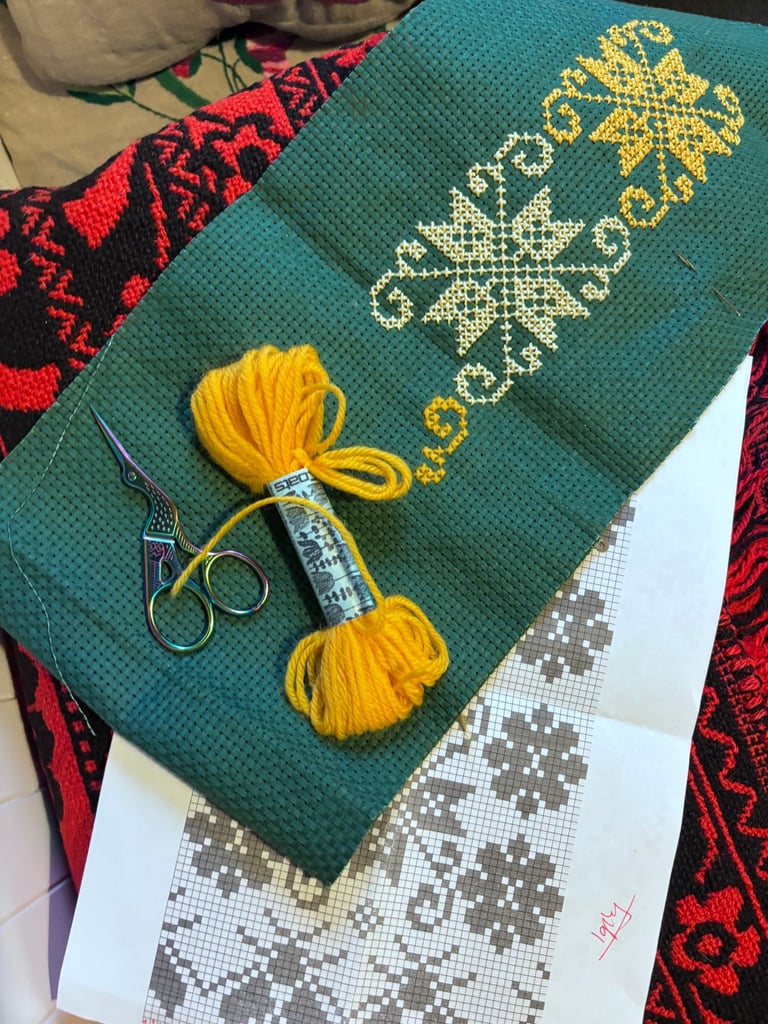
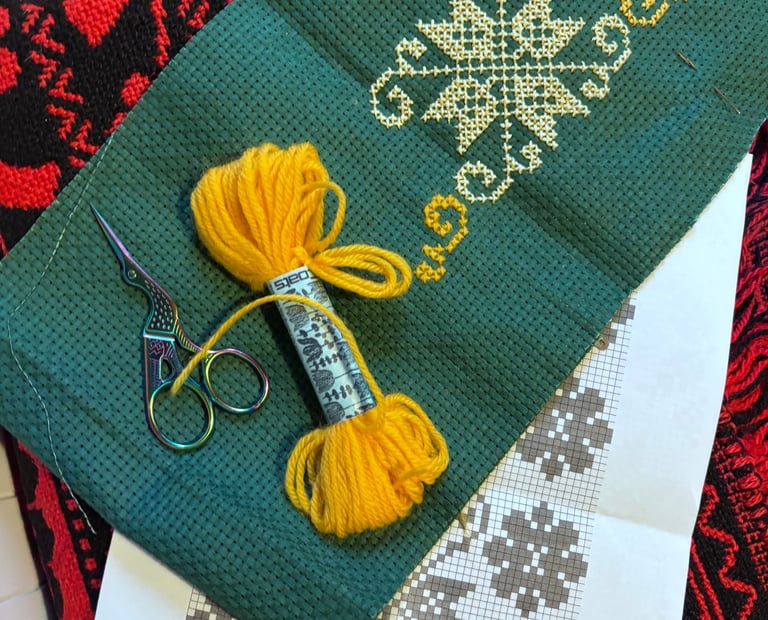
Embroidery floss is the thread most commonly used for cross-stitch. Standard cotton embroidery floss consists of six fine strands twisted together. Depending on the effect you want to achieve, you may stitch with one, two, three or more strands.
Many brands of embroidery floss are available. In Poland, the most popular include Ariadna, DMC and Anchor. Choosing high-quality floss is worthwhile, as it offers more durable colours, a smoother texture, and a more enjoyable stitching experience.
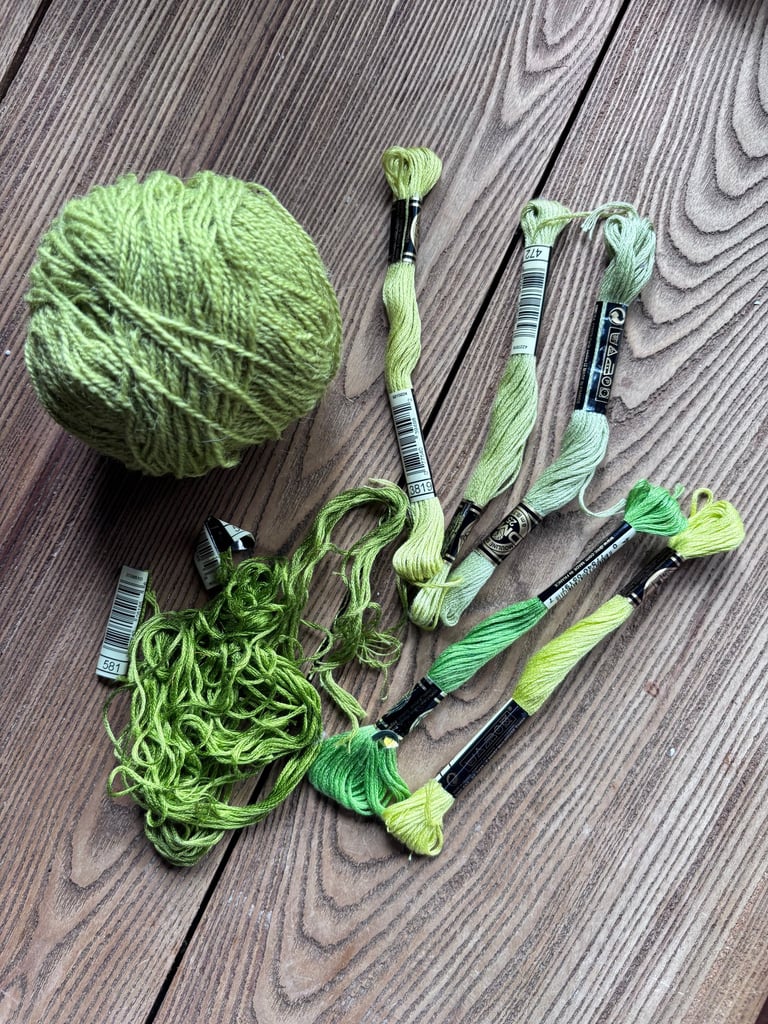
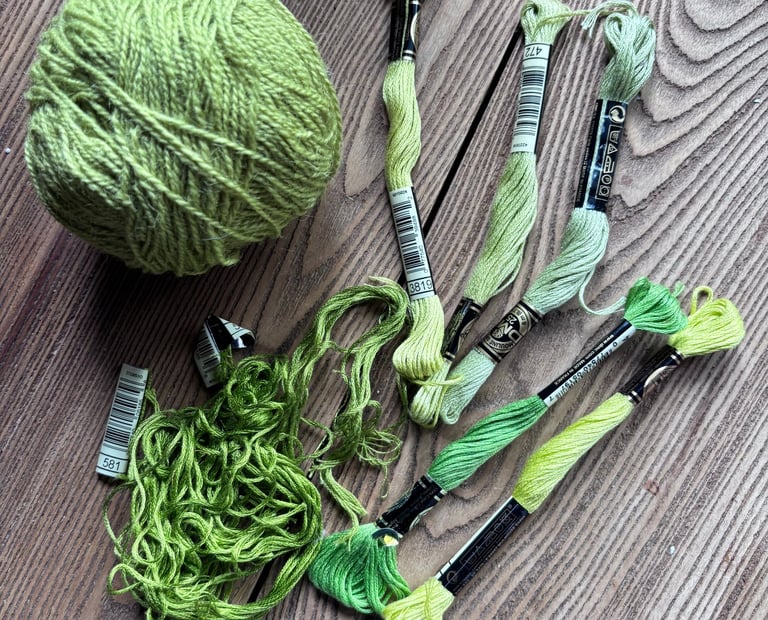
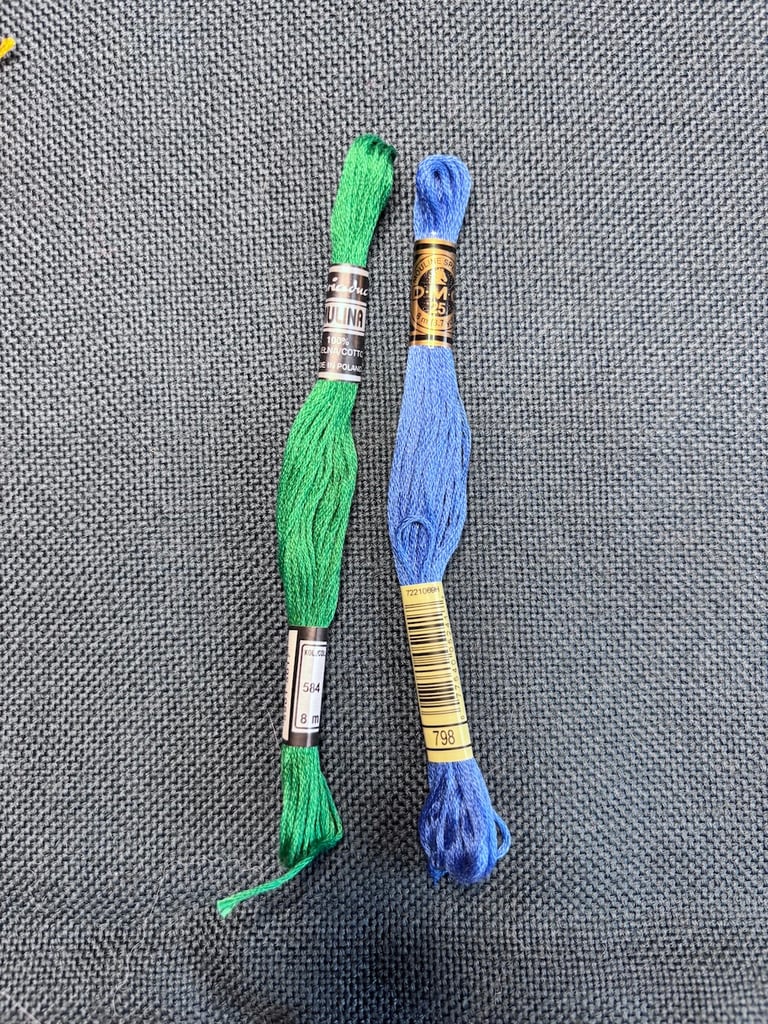
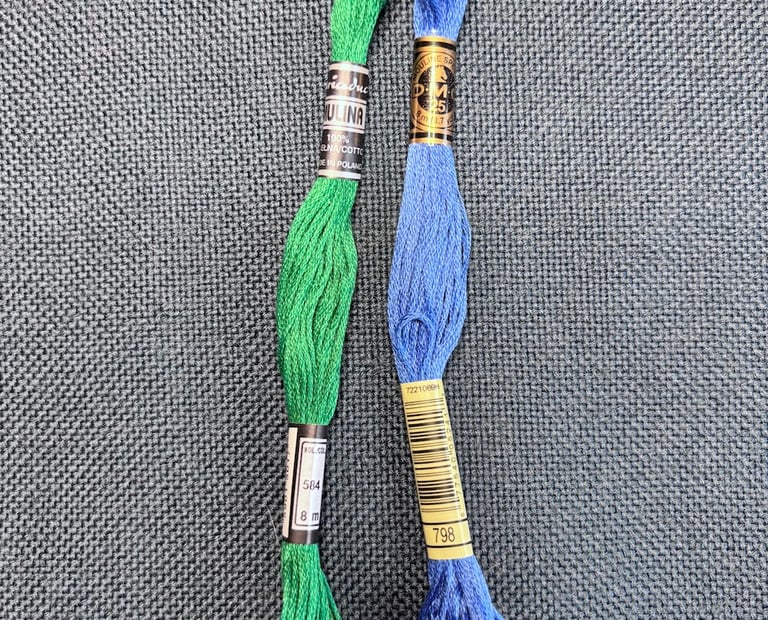
Each skein of embroidery floss is wrapped with two paper bands. One displays the manufacturer's name, while the other shows the colour number. The colour number is important, so it's a good idea to keep it until you finish your project. If you remove and discard the label, it may be difficult to find the exact same shade later.
If you're stitching a pattern designed for a specific colour palette, it's best to use the recommended brand of embroidery floss. Colour numbers and shades are not always identical across different manufacturers.
Organizing Your Embroidery Floss
When working on a cross-stitch project, you'll often use many different colours of embroidery floss. Keeping your threads well organized makes stitching easier, helps prevent mistakes and speeds up the entire process.
The simplest method is to store your floss on floss bobbins or in dedicated thread organizers. It's a good idea to label each colour with the manufacturer's colour number from the original paper band. This makes it easy to identify the correct shade whenever you need it.
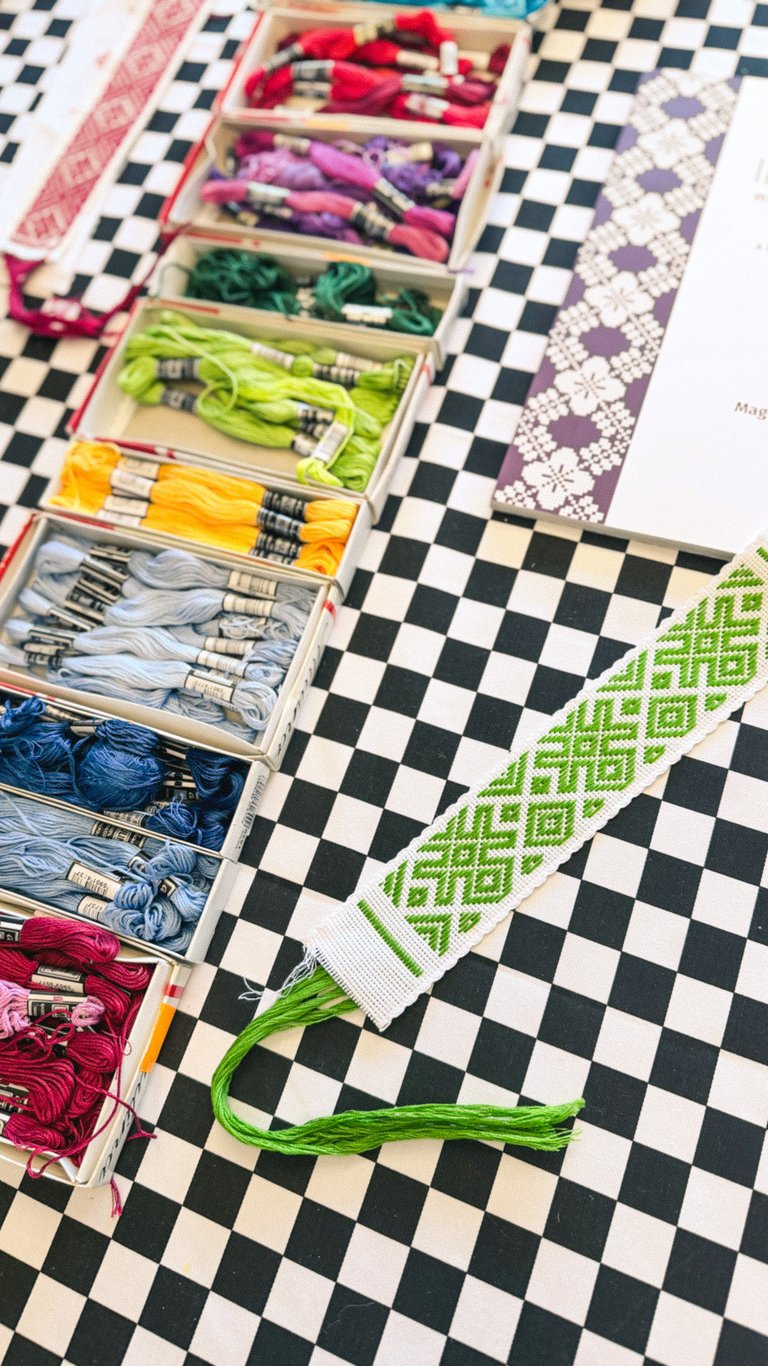
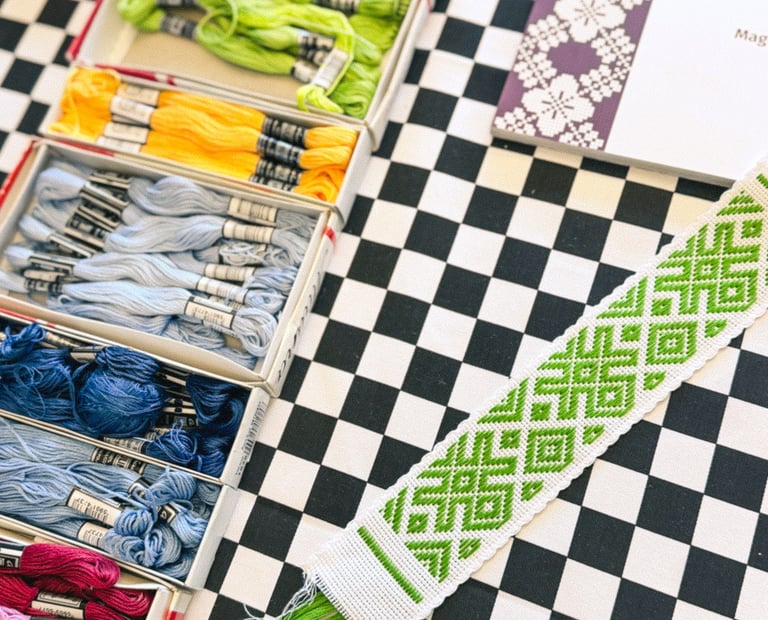
If you're working on a single project, you can prepare a separate set of floss just for that pattern and keep all the colours together. Be sure to keep the colour labels attached, especially for larger projects that may take weeks or months to complete.
While stitching, it's also helpful to keep your cut lengths of floss separated to prevent tangling. You can store them on a thread organizer with holes, on floss bobbins or in small bags or storage boxes.

Embroidery Fabric
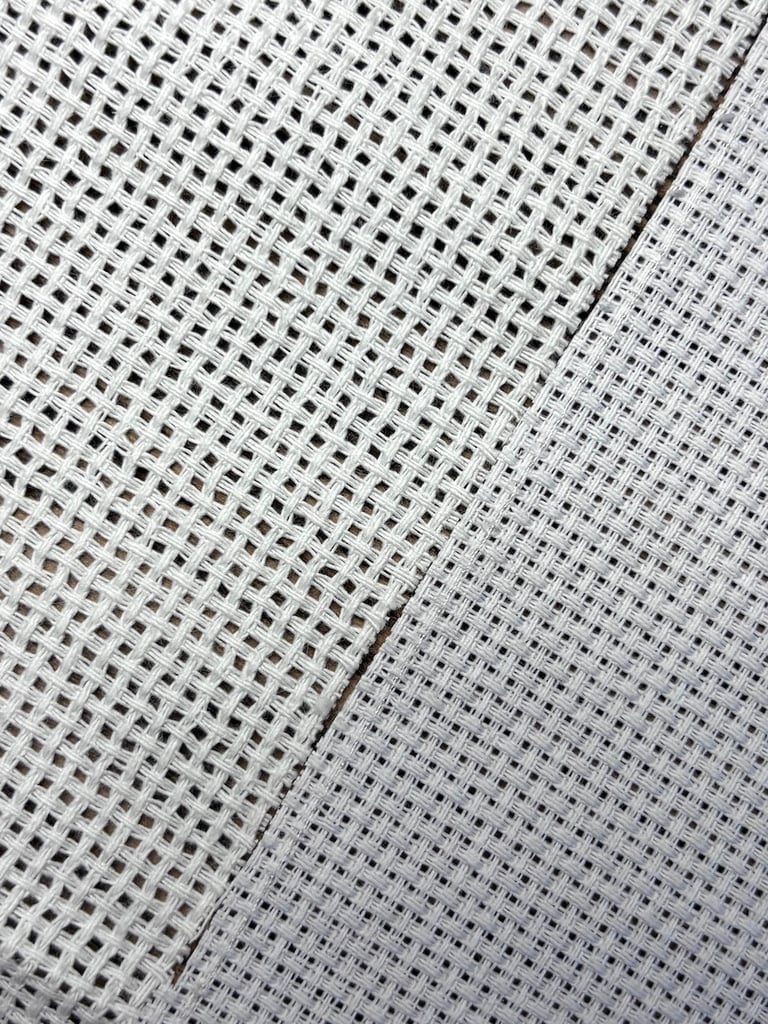
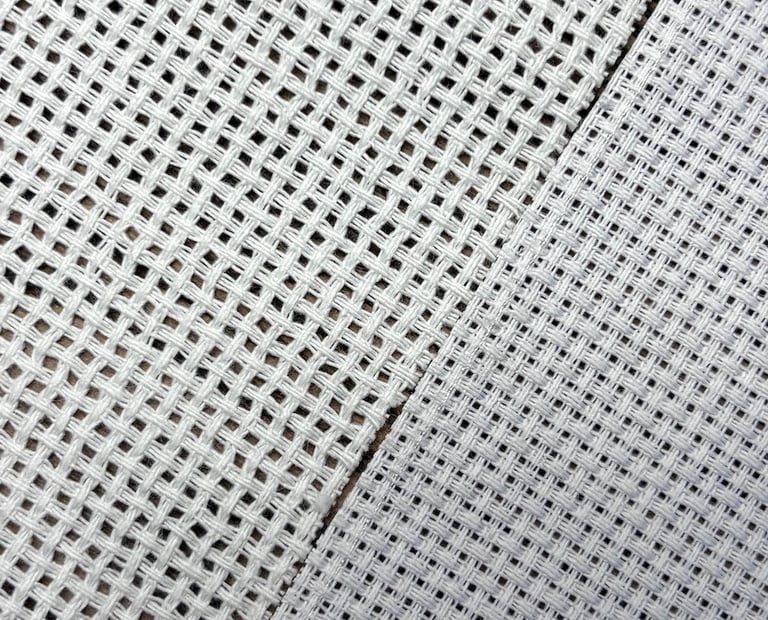
The most popular fabric for cross-stitch is Aida cloth. It has a regular weave and clearly defined holes, making it easy to count the squares and create neat, even stitches.
Aida is usually made from cotton and is often lightly starched, which makes it especially suitable for beginners. It should not be washed before you begin stitching, as this may remove the stiffness that makes it easier to work with.
Aida fabrics are labelled with the abbreviation ct, short for the English word count. This indicates the number of stitches that fit into one inch of fabric. One inch equals 2.54 cm (1 in = 2.54 cm).
For example:
11 ct = 11 stitches per inch
14 ct = 14 stitches per inch
16 ct = 16 stitches per inch
18 ct = 18 stitches per inch
The higher the count, the finer the fabric and the smaller the stitches.
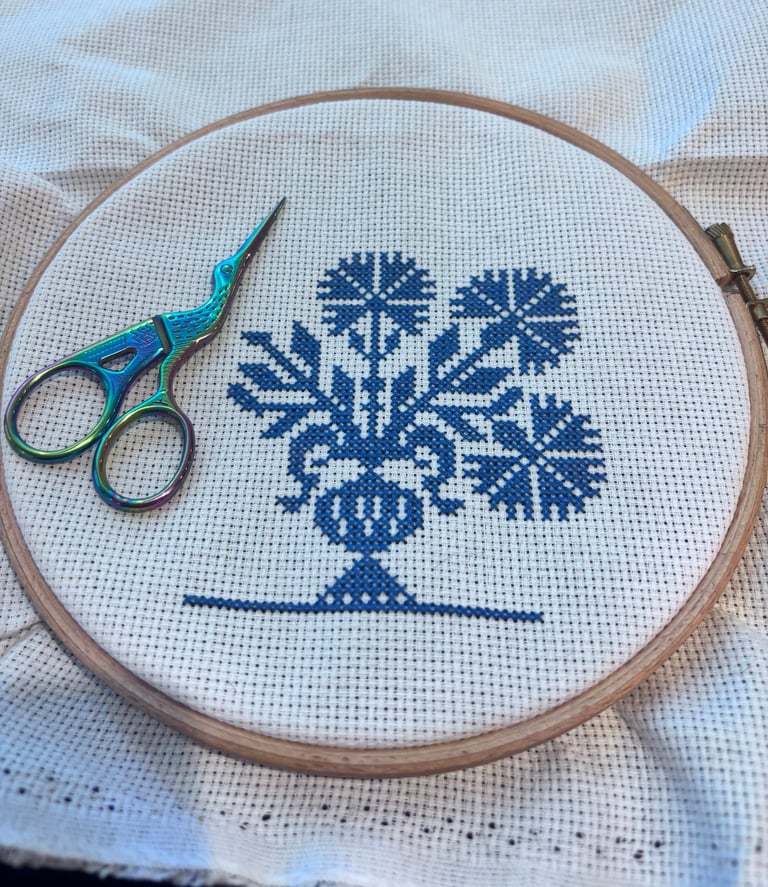
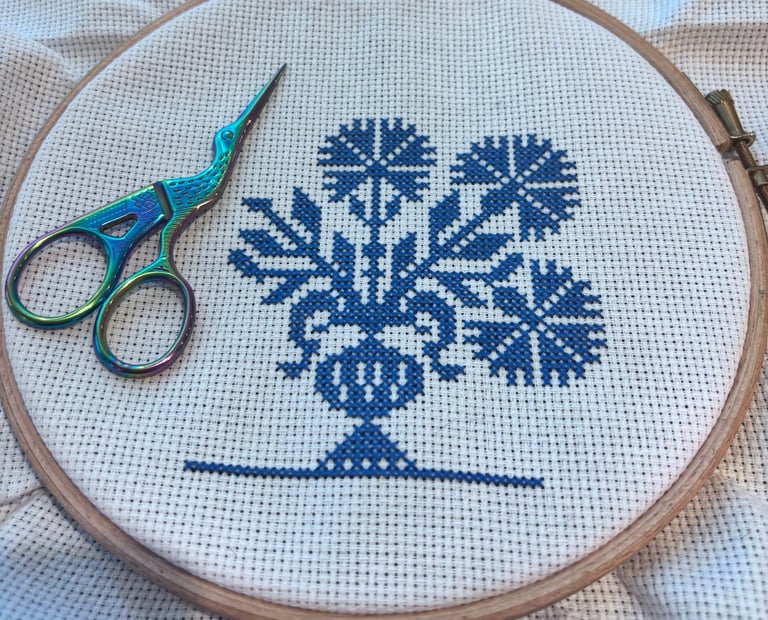
For beginners, I recommend 14-count or 16-count Aida. They are easy to see and count while still producing a neat and detailed finished result.
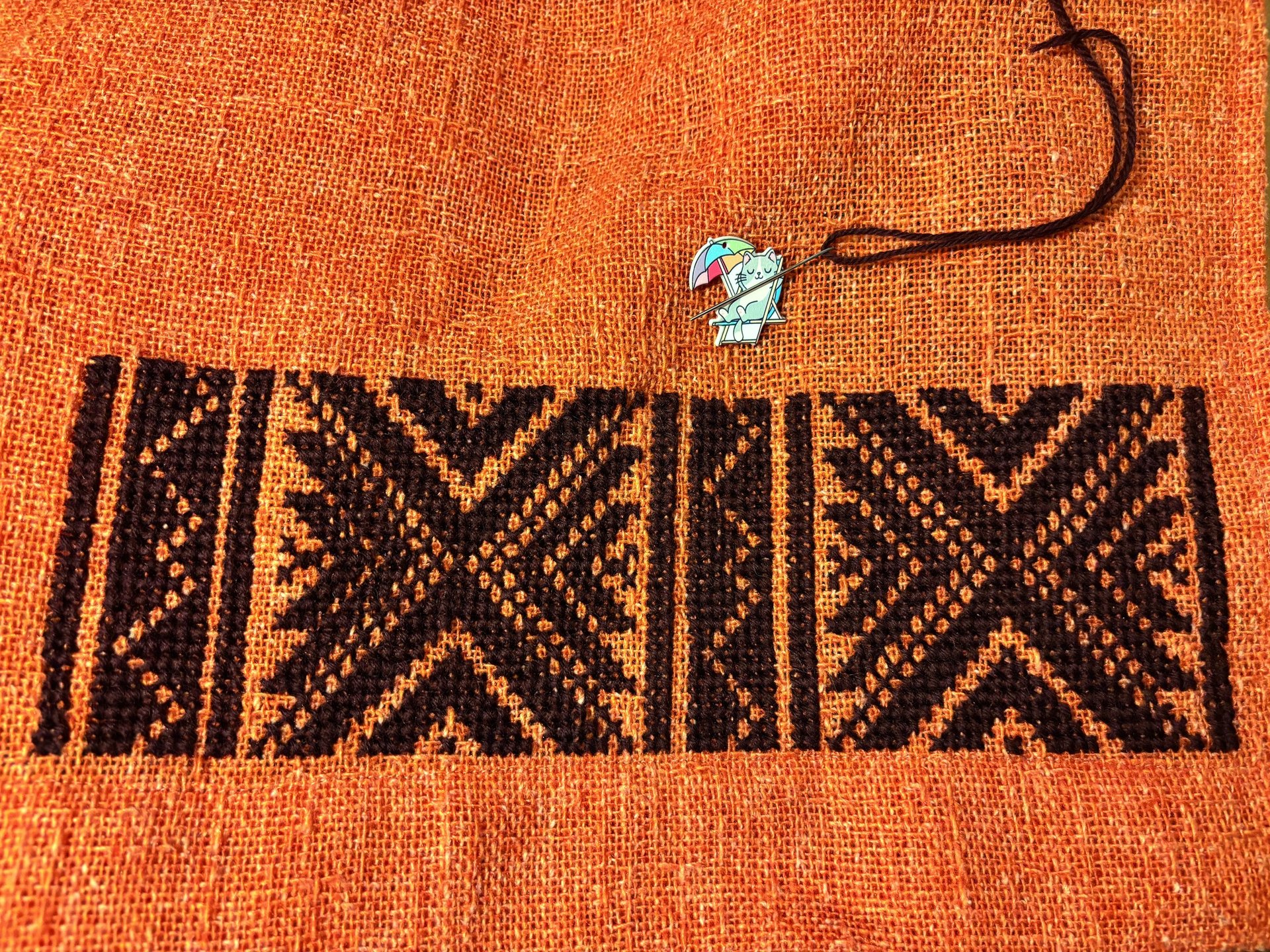
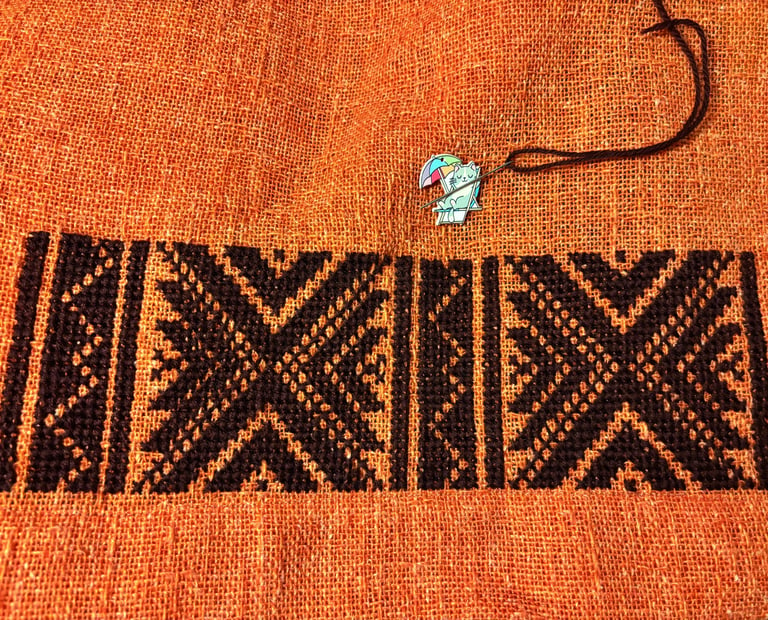
In addition to Aida, you can also stitch on linen or evenweave fabric. However, these require more experience because they do not have the clearly defined square holes that make Aida so beginner-friendly.
Needle
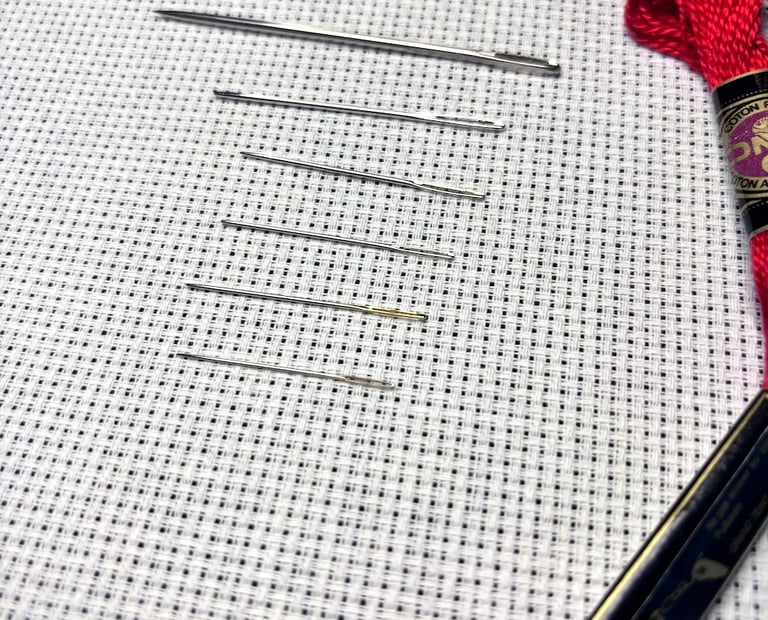
For cross-stitch on Aida cloth, a blunt-tip tapestry needle is used. The rounded tip passes smoothly through the holes in the fabric without splitting or damaging the fibres.
When stitching on linen, clothing, or other fabrics without clearly defined holes, a sharp embroidery needle should be used instead.
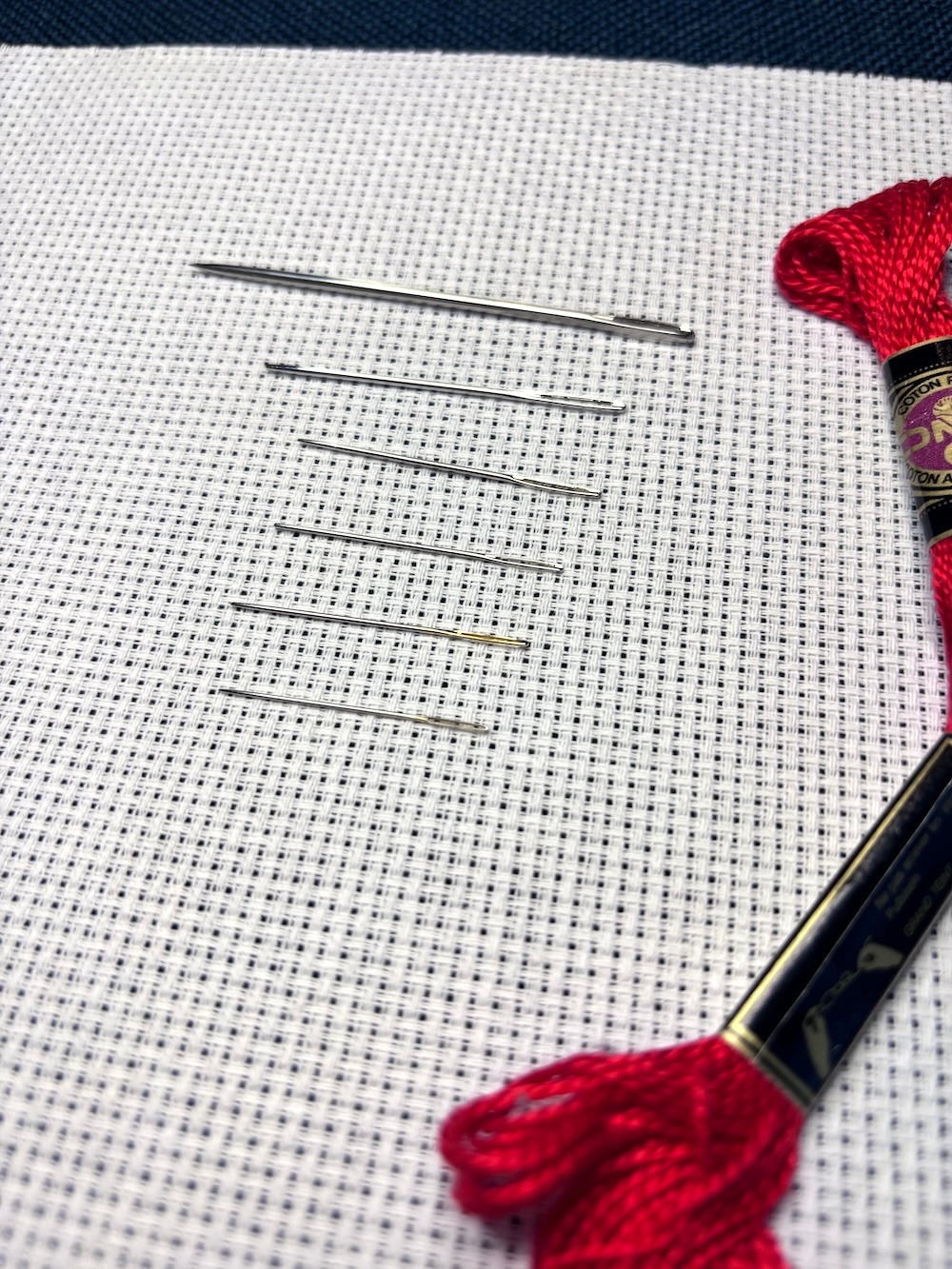
Your needle should be matched to the fabric count. If the needle leaves holes that are too large, it is too thick. If it is difficult to thread the embroidery floss through the eye, the needle may be too small.
Below are some general recommendations for choosing a needle based on the fabric count. These are only guidelines — the most important thing is that the needle passes easily through the fabric without stretching or distorting the holes.
Fabric Count - Recommended Needle Size
11 ct - 22
14 ct - 24
16 ct - 26
18 ct - 26–28
LoomRoom.pl
Social media
CONTACT
© 2026 LoomRoom
Address
LoomRoom
Galeria Leśna (1st floor)
3 Maja 47
17-200 Hajnówka