
How is a Woven Fabric Made?
Creating a handwoven textile is a process that consists of many stages.
In the past, most of these stages were carried out within the household—from growing flax or raising sheep, through preparing the fibres and spinning the yarn, to dyeing and weaving.
Each step required knowledge, experience, and patience, and the quality of every stage influenced both the appearance and the durability of the finished textile.
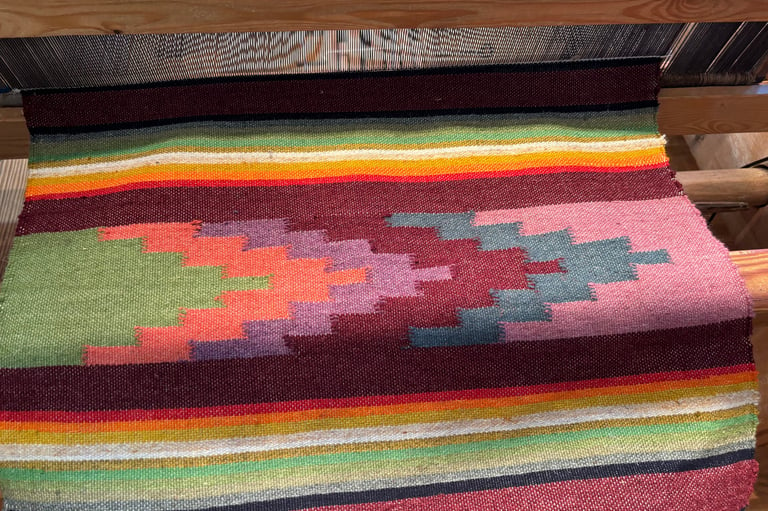
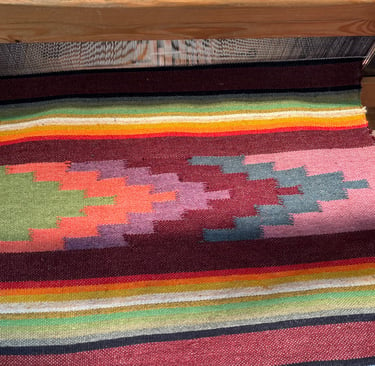
Preparing the Fibres
For centuries, the primary raw materials used in the Podlasie region were flax and hemp. Growing these plants required many months of work—from sowing and tending the crops to harvesting, retting, drying, breaking, and hackling the stalks. Only after these processes were completed could soft fibres suitable for further processing be obtained.
Another important raw material was wool from sheep. After shearing, which usually took place twice a year, the wool had to be thoroughly washed, cleaned of impurities, and carded so that the fibres were evenly aligned and ready for spinning.


Spinning the Yarn
Preparing yarn from flax and hemp fibres was a highly labour-intensive process. The fibres had to be repeatedly soaked and dried, then broken, cleaned, and hackled before they were ready for spinning.
Wool yarn required somewhat less preparation. Freshly shorn fleece was washed, dried, and carded using hand carders — flat brushes fitted with fine metal teeth — to disentangle, aerate, and evenly align the fibres.
Once prepared, the fibres were spun into yarn using a drop spindle and later a spinning wheel.
Spinning is the process of twisting loose fibres into a long, strong thread. It required considerable skill: if the yarn was twisted too loosely, it would break easily; if twisted too tightly, it became stiff and difficult to work with.
The thickness of the yarn greatly influenced the character of the finished textile. Fine yarns were used for delicate linen fabrics, while thicker yarns were chosen for rag rugs, blankets, and decorative woven textiles.
Preparing fibres and spinning yarn were often social activities. Gathering together to spin was a traditional way of spending long autumn and winter evenings. During these gatherings, people shared stories, exchanged local news, sang songs, and enjoyed each other's company.
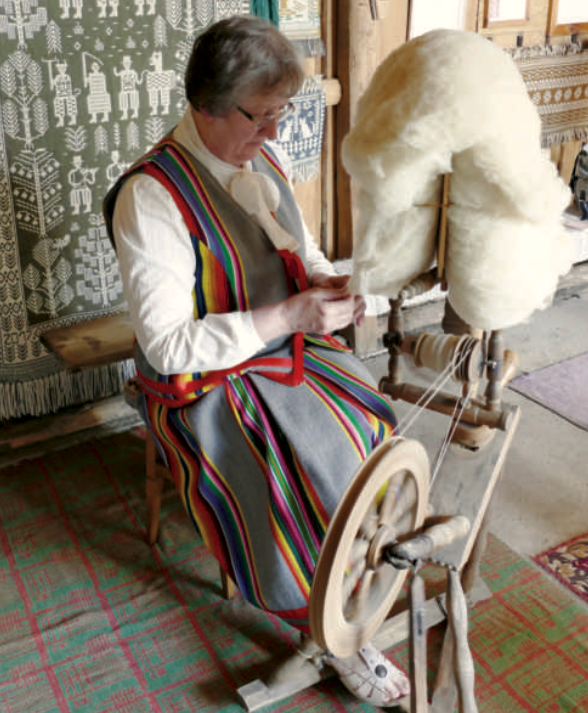
Demonstration of spinning on a spinning wheel by Bernarda Rość, a weaver from Szaciłówka
(Podlasie Institute of Culture - link)
Dyeing the Yarn
Not all textiles were left in the natural colour of the fibres, which was typically a light cream or grey. Yarn was often dyed before weaving, making it possible to create colourful stripes and intricate woven patterns.
For centuries, only natural dyes were used. These were obtained from plants, tree bark, leaves, flowers, fruits, and lichens. Shades of yellow, for example, were commonly produced from onion skins, browns from oak bark and iron-rich "rust water," while black was achieved by combining natural ingredients such as bark and cones, as well as by using the naturally dark fleece of certain sheep breeds to produce the yarn.
During the nineteenth century, synthetic dyes became increasingly widespread, allowing weavers to achieve brighter colours and more consistent results. The greater availability of these dyes is clearly reflected in the bolder and more vibrant colour palettes found in textiles woven in the Podlasie region from the second half of the nineteenth century onward.


Preparing the Warp
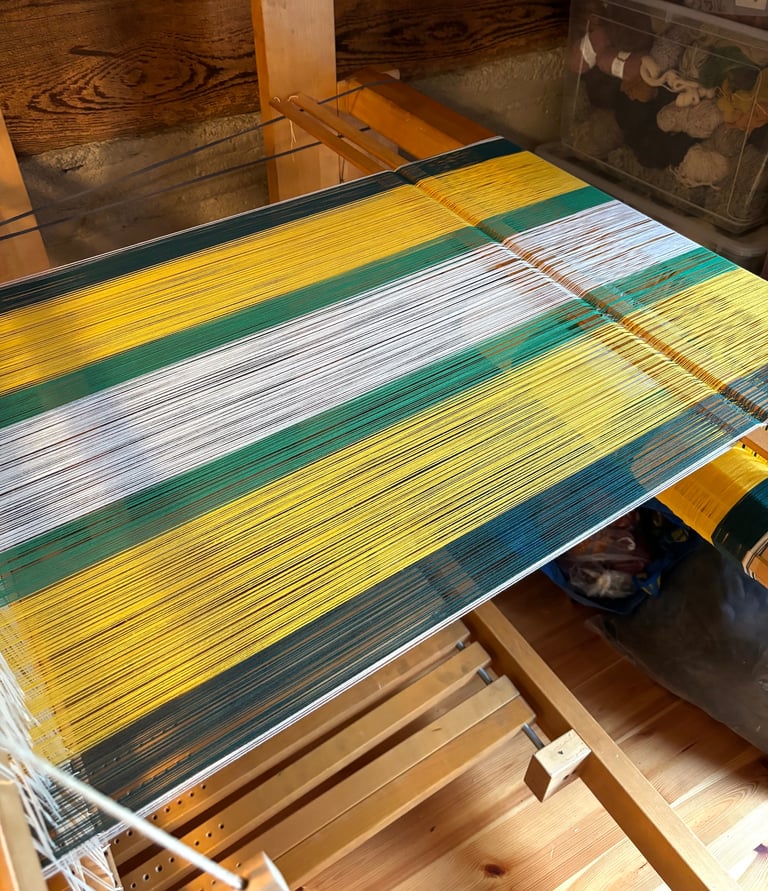
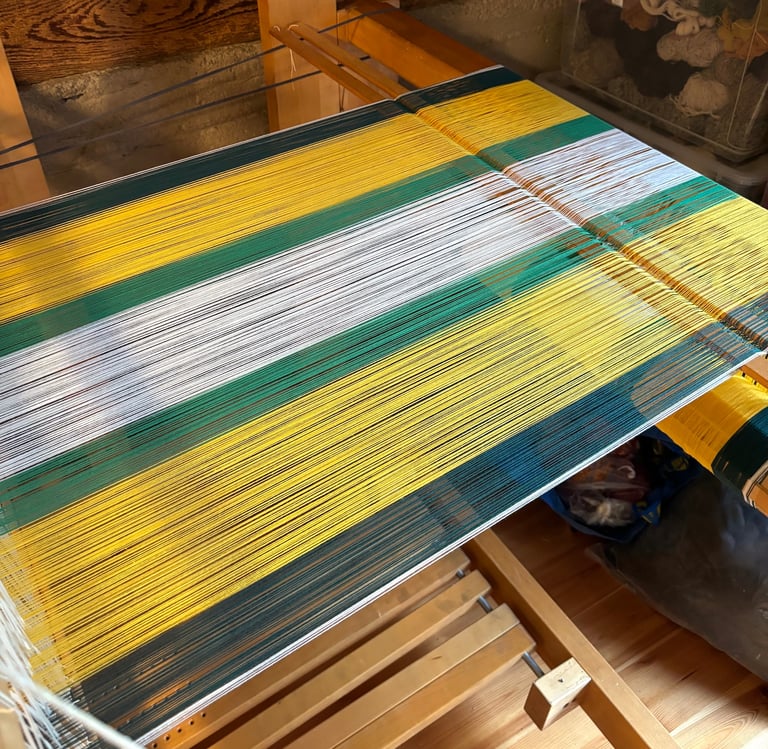
Preparing the warp was one of the most time-consuming stages of the entire weaving process. The warp consists of the long threads stretched lengthwise on the loom, forming the structural foundation of the future textile.
Each thread had to be carefully measured, arranged in the correct order, and threaded through the heddles and the reed. Even a small mistake at this stage could cause problems during weaving or affect the appearance of the finished pattern.
Depending on the planned length and width of the fabric, preparing the warp could take many hours.
Once the warp was ready, the loom itself had to be set up. The warp threads were tensioned on the loom, and the weaver checked that every part of the mechanism was functioning correctly. Proper warp tension was essential—if it was too loose, weaving became difficult; if it was too tight, the threads could easily break.
Only after completing this stage could the actual weaving begin.
Weaving
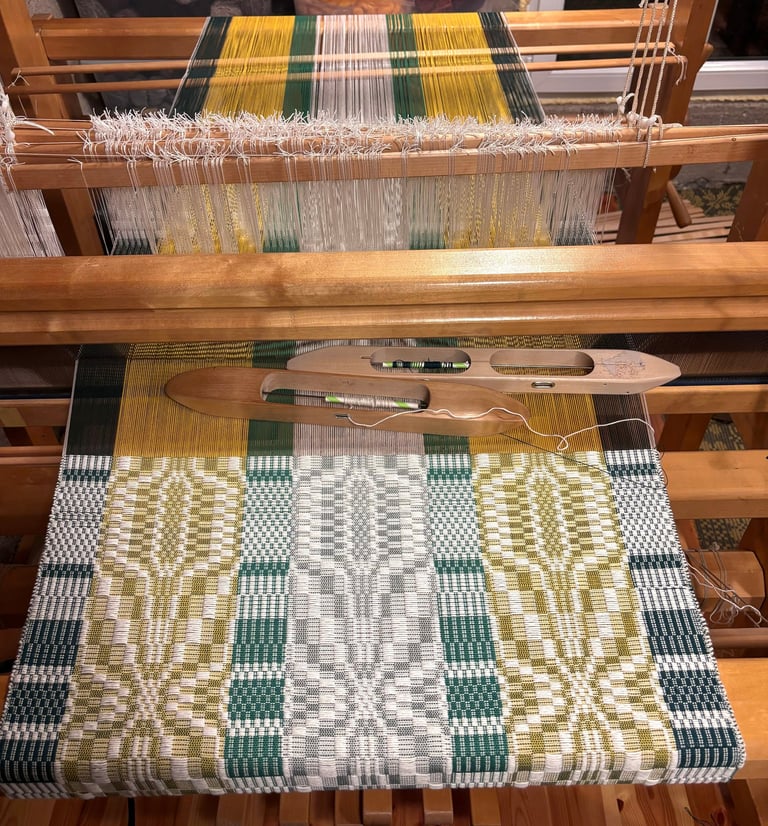
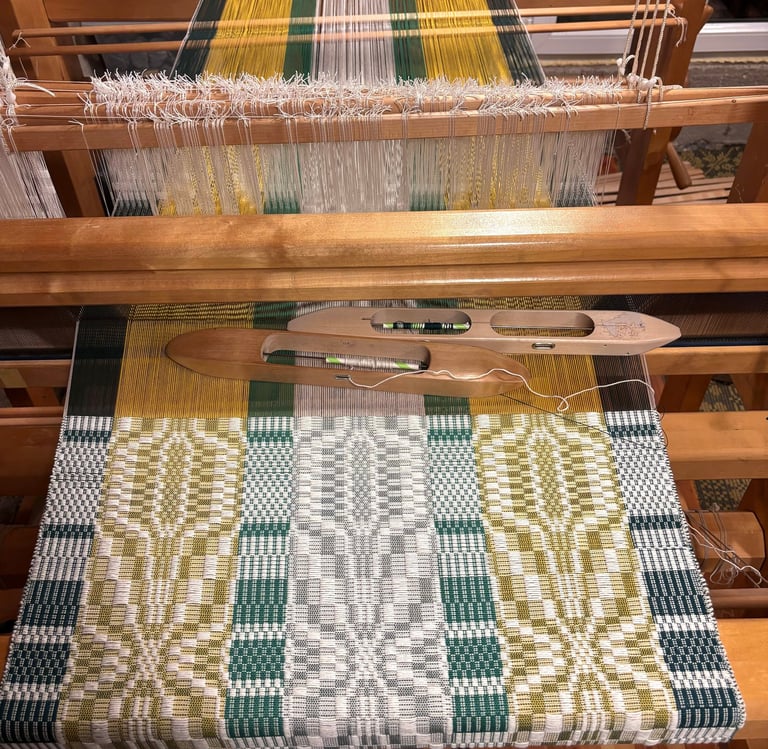
During weaving, the weaver presses the appropriate treadles, which raise or lower the heddles to create a shed between the warp threads. A shuttle carrying the weft yarn is then passed through the opening and the beater is used to press the newly inserted weft firmly against the woven fabric.
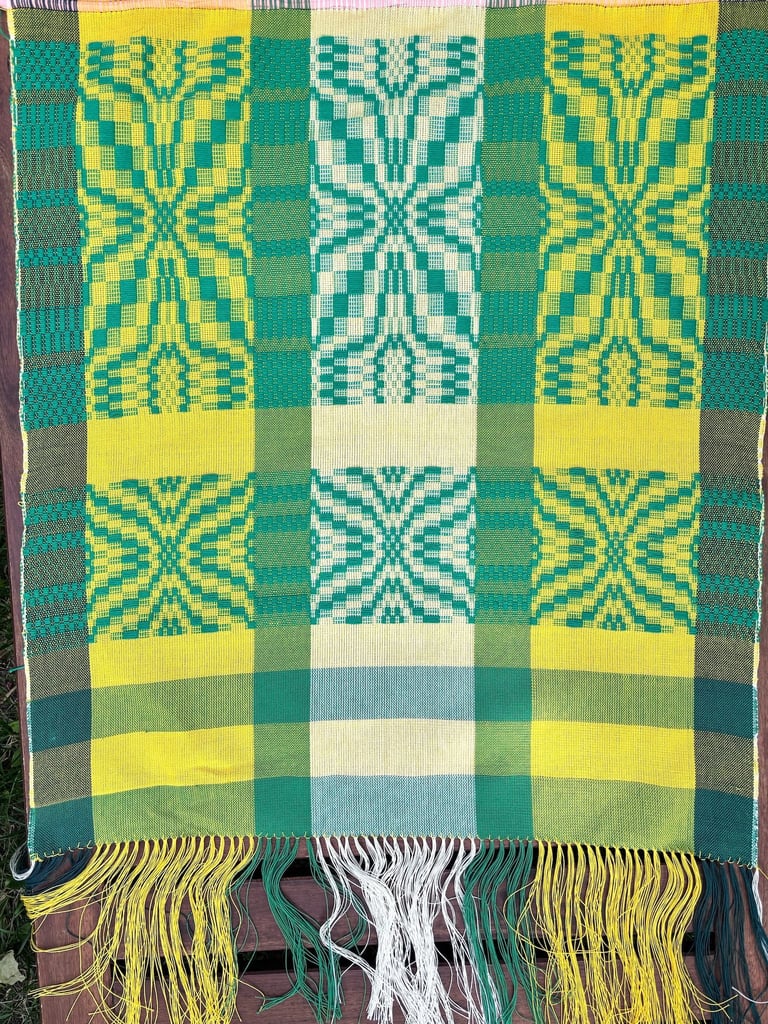
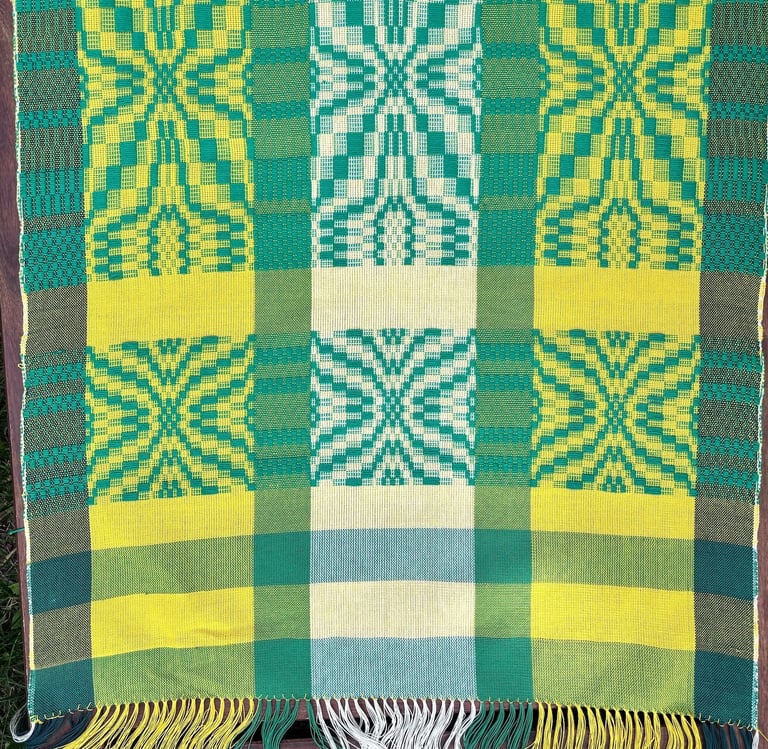
By repeating these actions, the structure of the textile is gradually built up. In more complex weaving techniques, selected warp threads may also be picked by hand or different heddle combinations used to create decorative woven patterns.
Finishing the Textile
Once the weaving is complete, the fabric is cut from the loom. Its edges are then secured, the fringe is trimmed or evened out and any other finishing details are added, depending on the intended use of the textile.
Today, many handwoven textiles are also gently washed and pressed to allow the fibres to settle evenly and to give the finished piece its final appearance.
Only then is the textile ready for everyday use or for display as a decorative piece in the home.
LoomRoom.pl
Social media
CONTACT
© 2026 LoomRoom
Address
LoomRoom
Galeria Leśna (1st floor)
3 Maja 47
17-200 Hajnówka