
Types of Traditional Podlasie Textiles
For centuries, weaving was an integral part of everyday life in the Podlasie region. Nearly every household had a loom on which textiles were woven for both practical use and decorative purposes — from everyday household fabrics to textiles used to adorn homes and traditional clothing.
Different types of textiles varied in both their weaving techniques — and consequently in the level of skill required to produce them — as well as in their intended use. Many were woven from flax and wool produced on the family farm, and the knowledge of how to make them was passed down from one generation to the next.
In this section, you will find an overview of the most distinctive and widely recognized traditional textiles of the Podlasie region.
Kilim
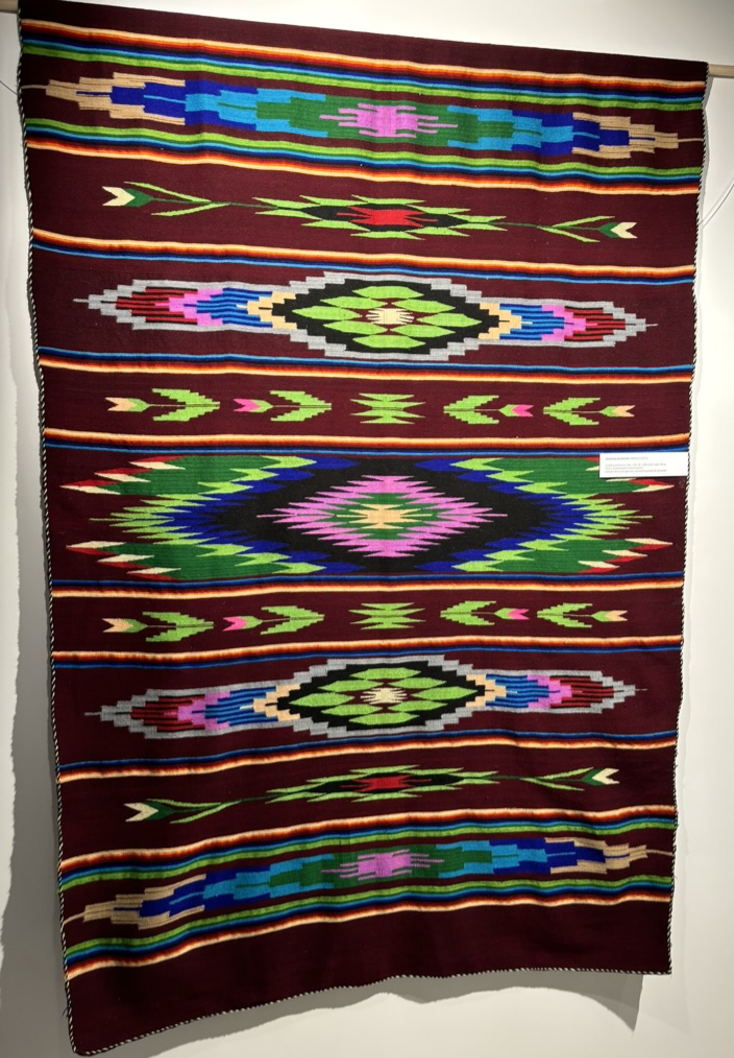
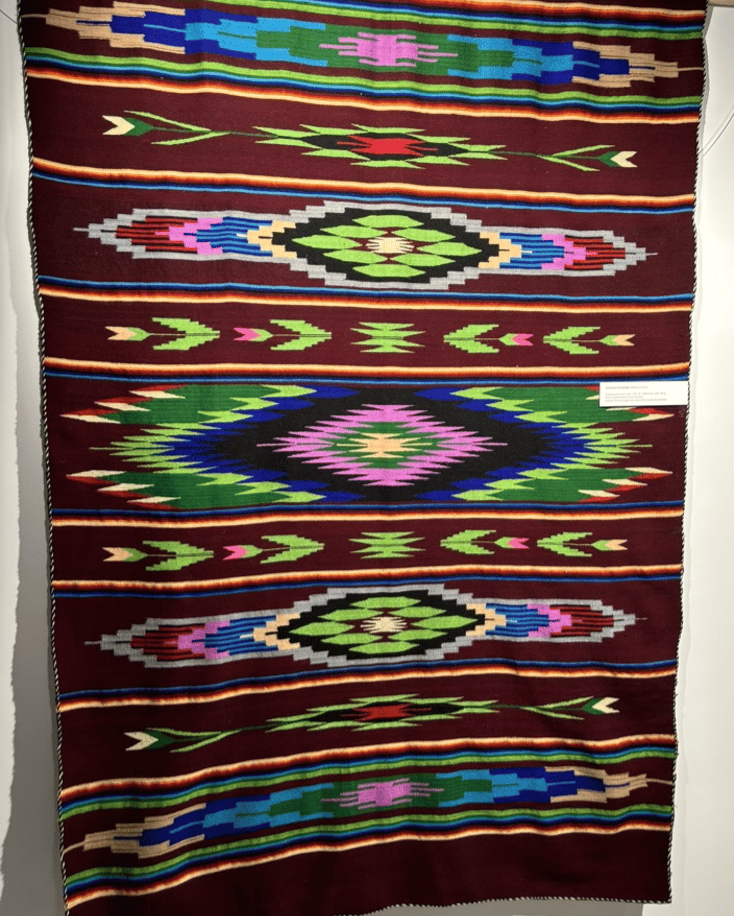
Traditional kilims were woven by rural weavers on wide looms using wool yarn. They were primarily made as bedspreads, rugs or decorative wall hangings.
Their most distinctive feature was a striped composition filled with geometric ornaments — diamonds, zigzags, hooks, and wedge-shaped motifs — arranged in rhythmic, symmetrical patterns.
In the second half of the nineteenth century, many of these designs were documented by Ludwik Wierzbicki in his publication "Patterns of Domestic Craft: Kilims and Peasant Rugs in Ruthenia".
Woven Bands (Krajki)
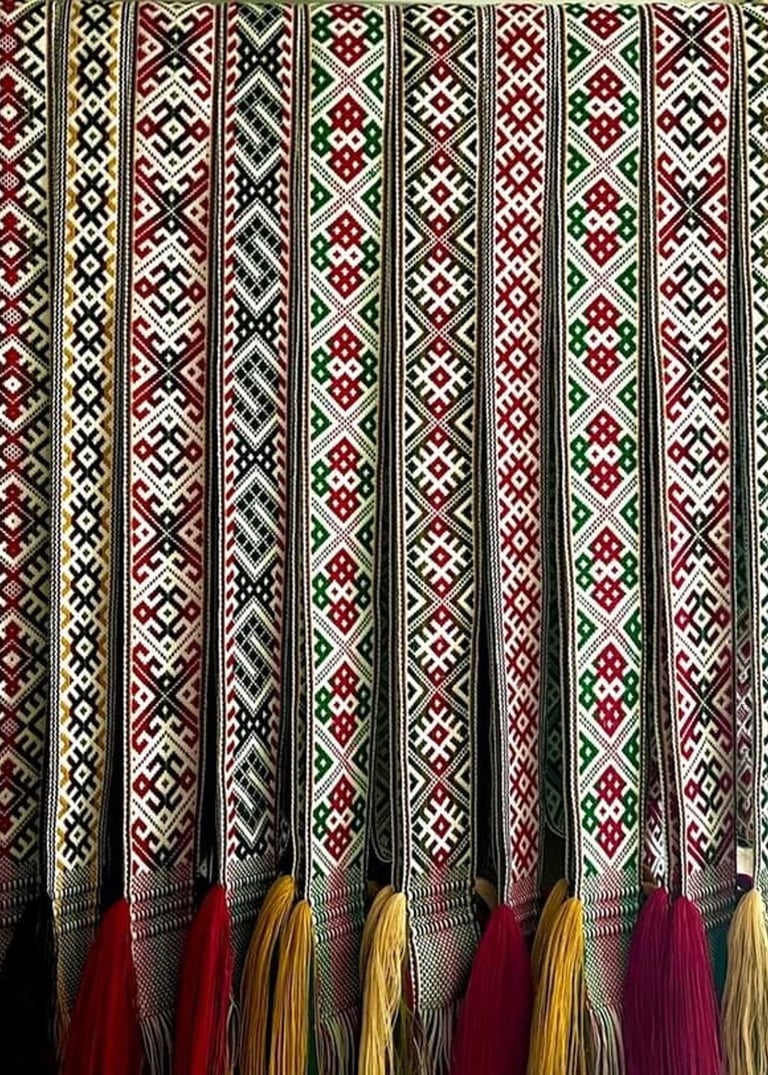
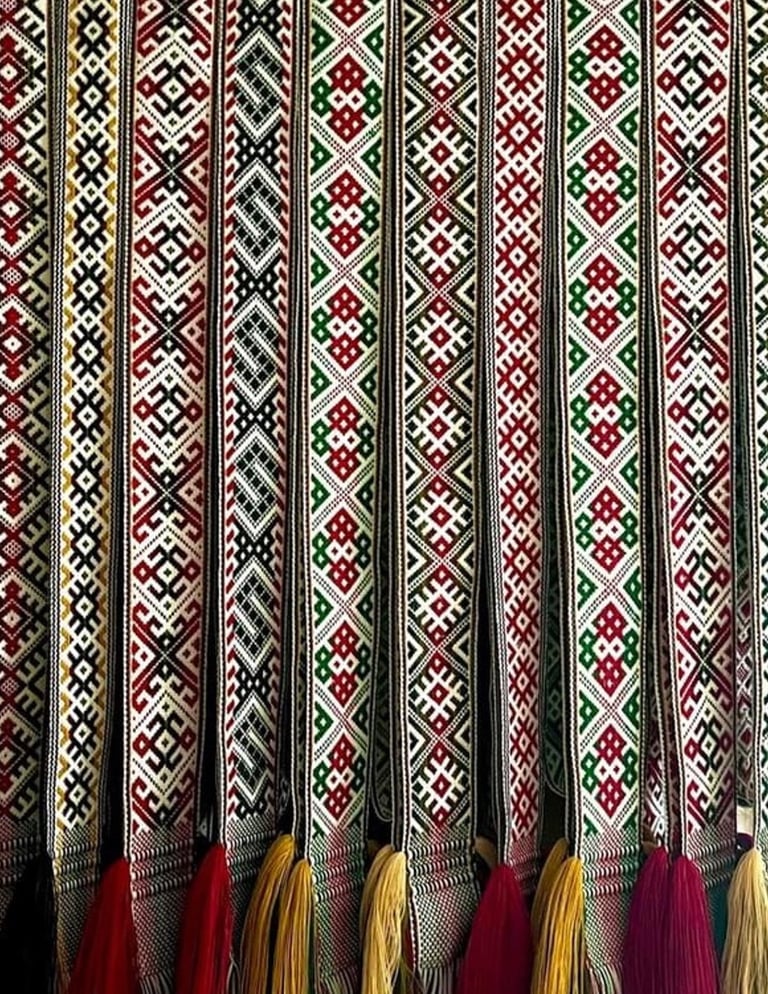
Krajki are narrow, handwoven bands traditionally made from wool, flax, or cotton. They are one of the oldest forms of Polish folk weaving.
They were woven on simple band looms, a heddle frame (bardko) or using tablet weaving techniques. Krajki are distinguished by their rich colours and geometric patterns, including diamonds, zigzags, stripes, and crosses.
These woven bands served both practical and decorative purposes. They were used as belts, to reinforce and embellish the edges of shirts, aprons, and skirts, and to tie headscarves. They were also used for fastening sacks and chests, and during religious festivals and celebrations to decorate Easter palms and ceremonial wreaths. In many regions of Poland, krajki were an important element of traditional folk costume and ceremonial dress.
Most krajki measured between 2 and 10 cm (0.8–4 in) in width, while their length depended on their intended use. They were woven from brightly coloured yarns arranged in rhythmic compositions based on repeating geometric motifs.
The choice of colours was far from random. Reds, greens, deep blues, yellows, and whites dominated, reflecting the characteristic colour palette of traditional Polish folk weaving.
Multi-Shaft Weaving
Multi-shaft weaving refers to textiles woven on looms equipped with more than two shafts (also called harnesses).
Using a greater number of shafts—most commonly 4, 8, 16, or even more — allows the weaver to create far more complex weave structures and richer patterns than are possible with a simple plain weave. The more shafts a loom has, the greater the possibilities for designing intricate ornaments and textured fabrics.
In traditional folk weaving, multi-shaft textiles were typically woven from flax, wool or cotton. They were used to make tablecloths, towels, bedspreads, rag rugs and decorative textiles.
The use of multiple shafts makes it possible to weave a wide variety of structures, including twill, rib, basket weave and damask. These techniques create geometric motifs such as diamonds, herringbone, zigzags, checks and stripes, all of which are characteristic of traditional folk textile design.
The final appearance of the fabric depends on both the way the warp threads are threaded through the heddles and the sequence in which the loom's treadles are pressed.
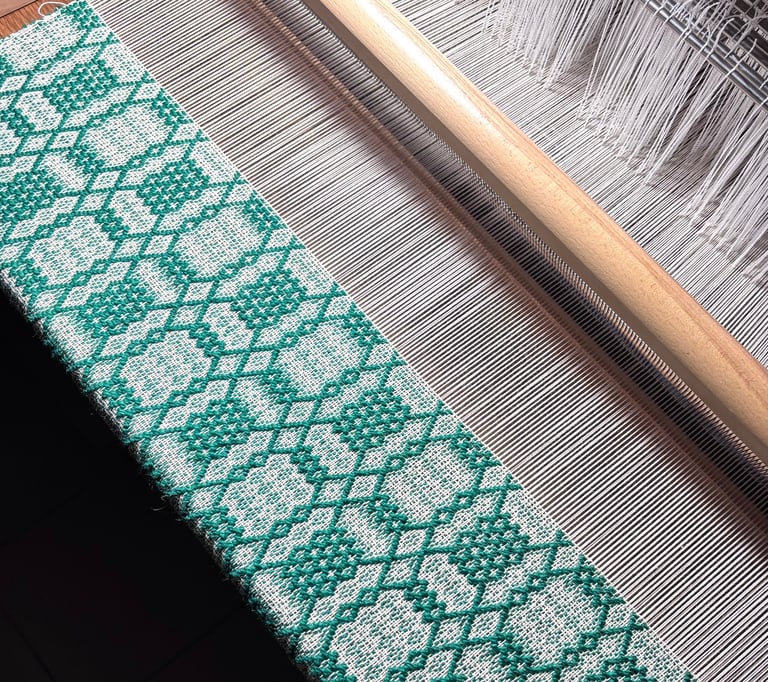
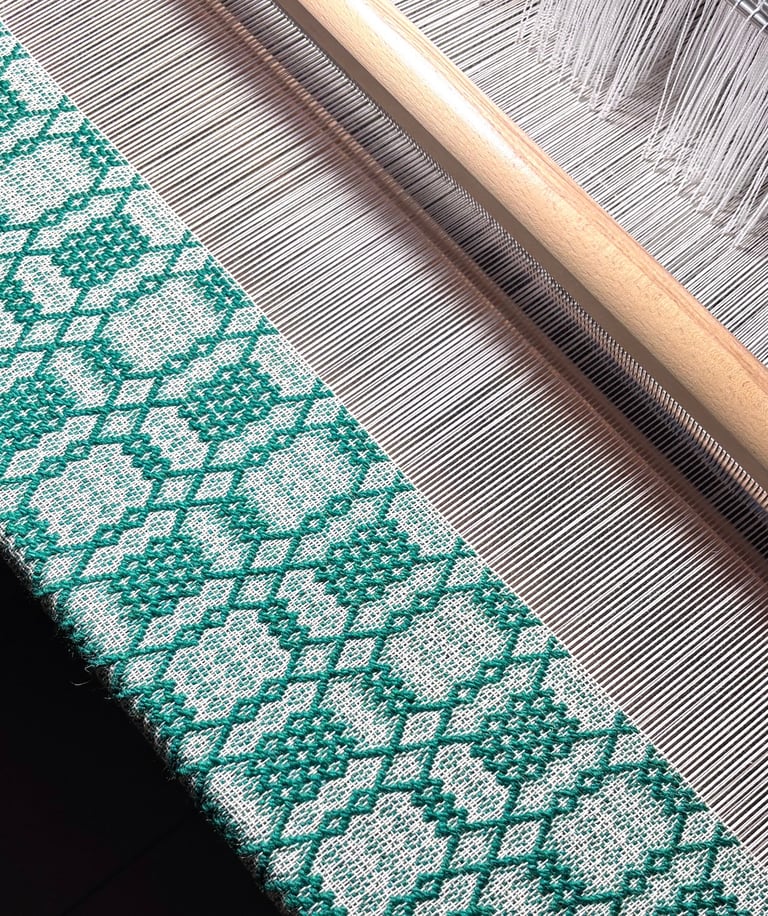
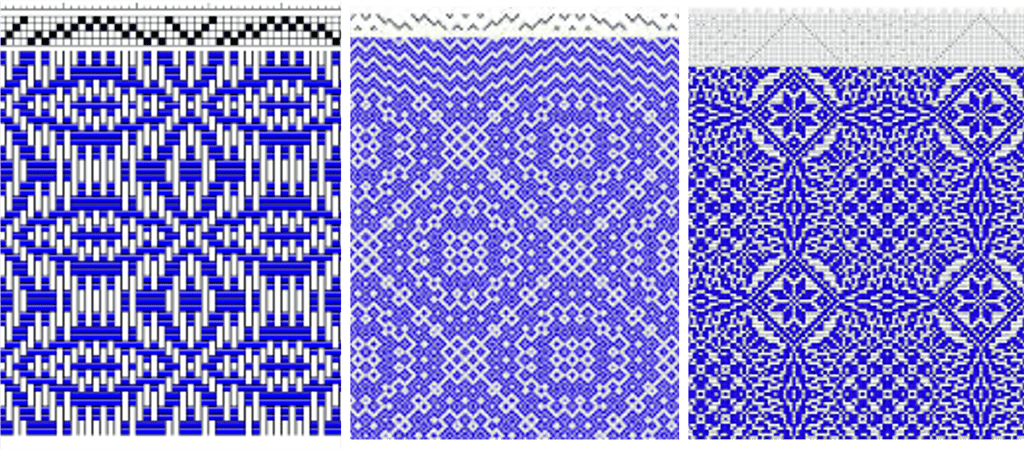
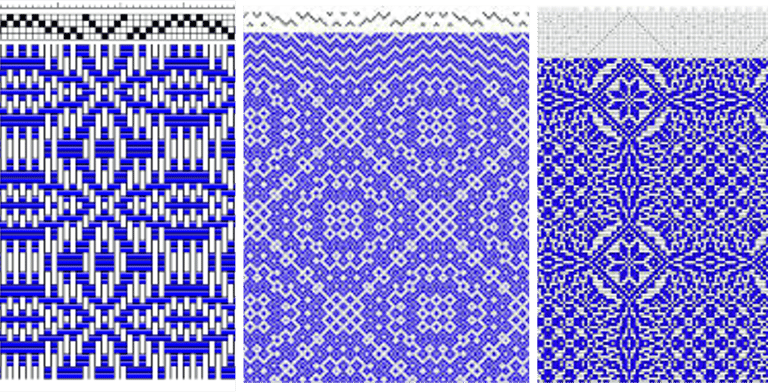
Example: The more shafts a loom has, the more elaborate the patterns that can be woven.
Pick-Up Weaving
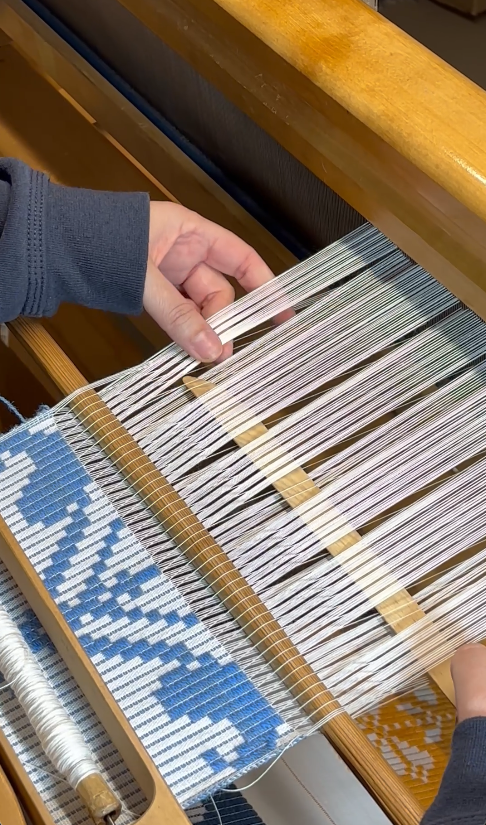
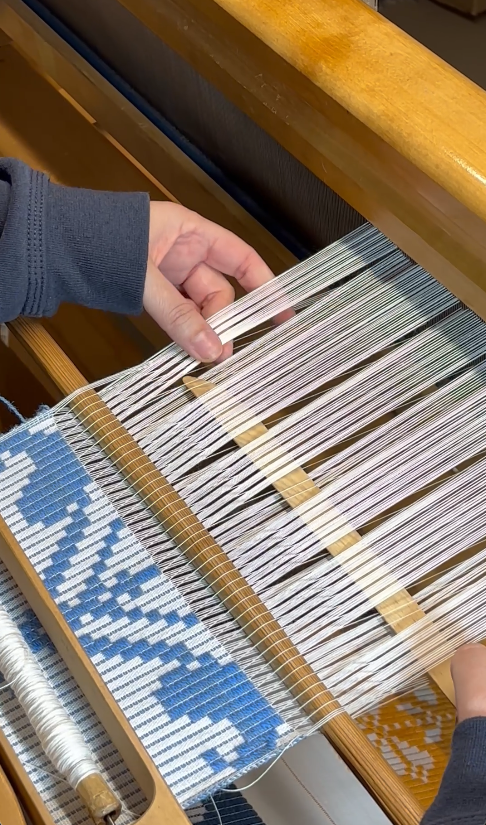
The textiles presented below belong to the group known as pick-up weaves. These are traditional folk textiles in which the pattern is created by manually selecting individual warp threads during the weaving process.
In addition to operating the loom, the weaver uses a simple tool known as a pick-up stick (or pick-up tool) to lift selected warp threads, allowing decorative motifs to be woven without the need for additional loom mechanisms.
These techniques require a high degree of precision, experience and patience.
Double-Warp Weaving
Did you know?
The traditional double-warp weaving technique is also used in contemporary art. Between 2022 and 2023, Podlasie weavers Bernarda Rość and Lucyna Kędzierska created the monumental Women's Curtain for the Juliusz Słowacki Theatre in Kraków. Measuring approximately 11 × 12 metres (36 × 39 ft), the textile was handwoven on traditional wooden looms from a design by artist Małgorzata Markiewicz. It is the largest contemporary double-warp textile created in Poland and demonstrates how a centuries-old folk weaving technique can be used to produce ambitious works of contemporary art.
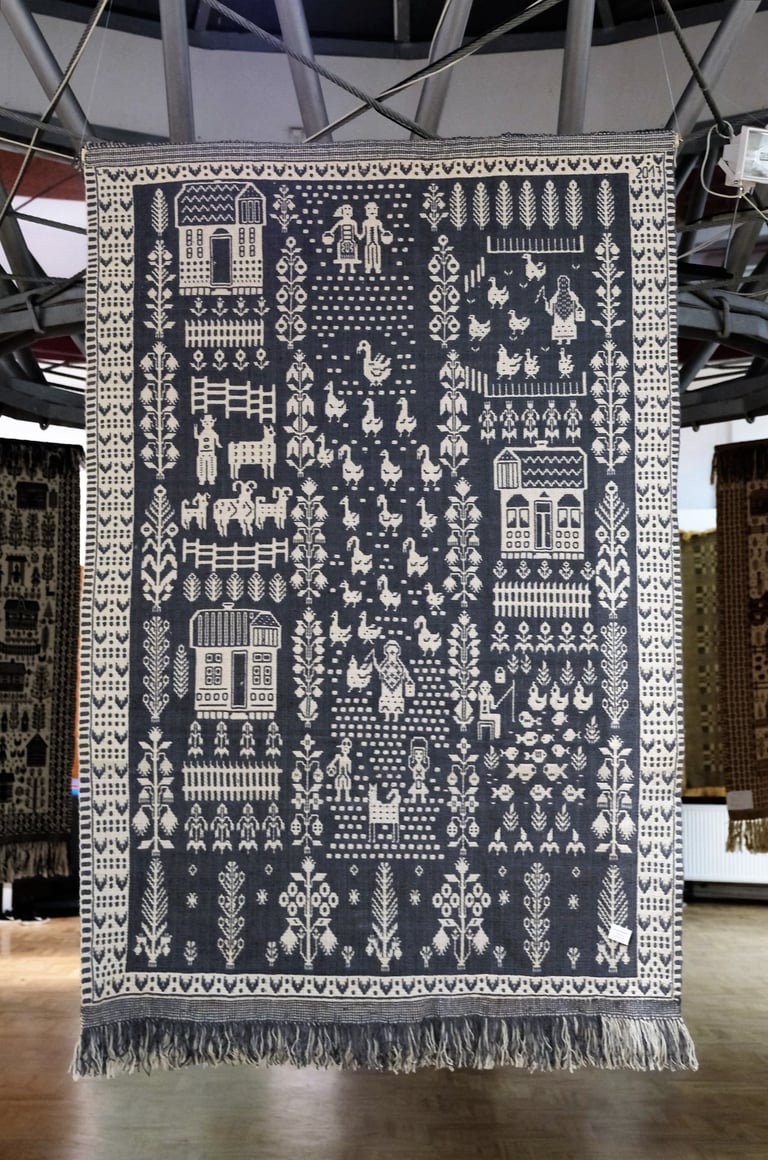
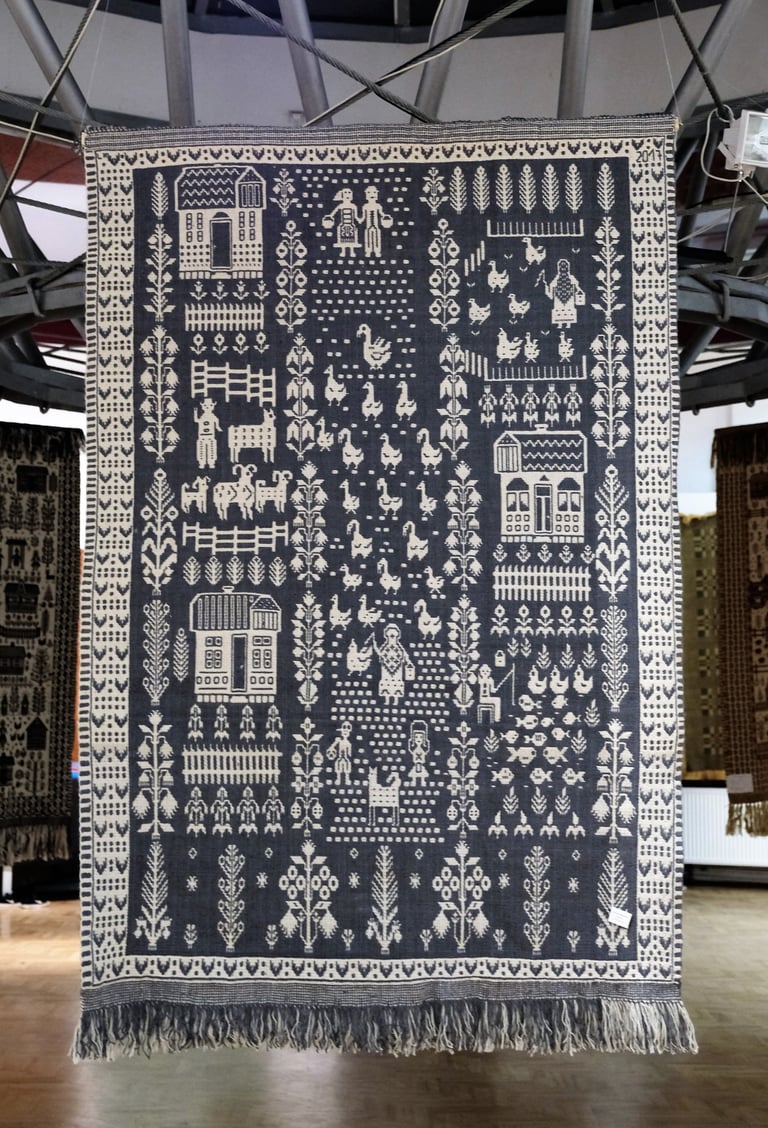
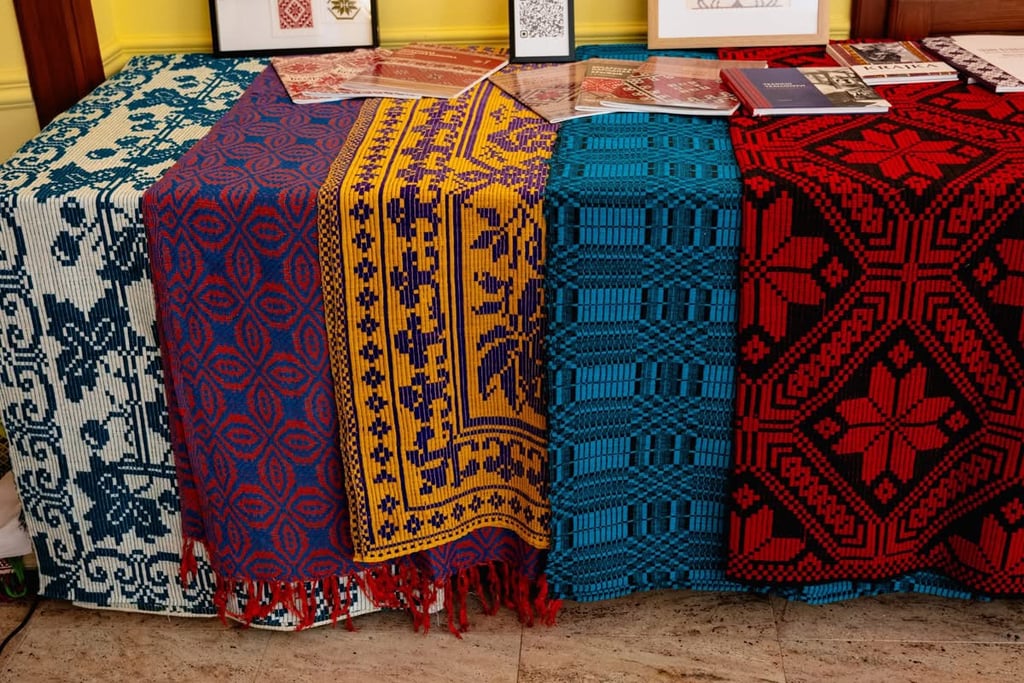
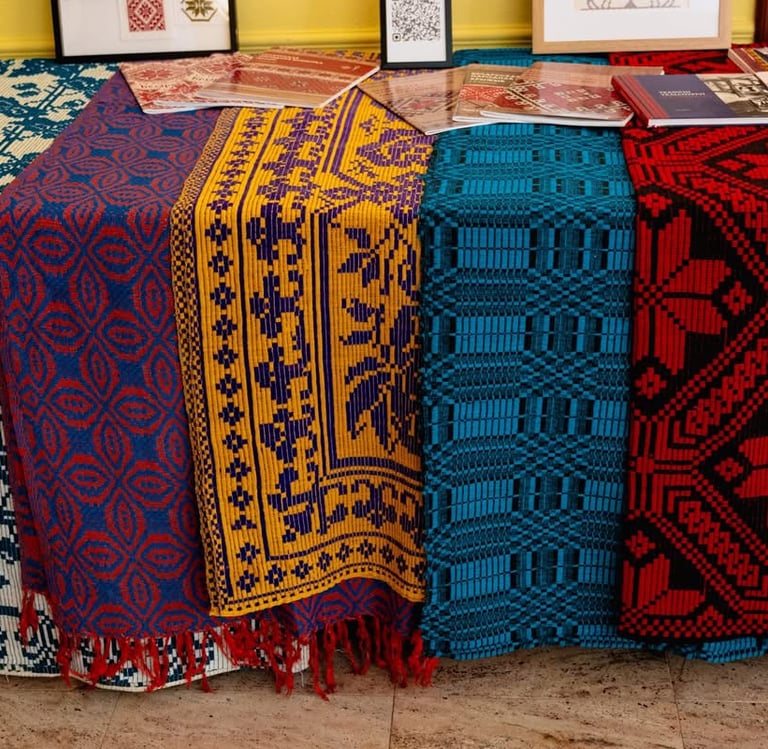
Double-warp textile by Lucyna Kędzierska, awarded in the 2017 competition organized by the Janów Double-Warp Weaving Chamber.
Double-warp weaving is one of the most distinctive techniques in Polish folk weaving. It is woven on a loom using two separate layers of warp, usually in contrasting colours. This creates a reversible pattern: the design appears on both sides of the fabric, with the colours inverted on the reverse. As a result, both sides of the textile are equally decorative.
This technique has been cultivated for centuries, particularly in the Podlasie region, especially around the village of Janów, where it continues to be practiced by local weavers today. Double-warp textiles were traditionally woven from wool and used as bedspreads, blankets, rugs and wall hangings. Their designs feature geometric, floral and animal motifs inspired by nature and local folklore.
An important figure in the preservation and development of double-warp weaving was Eleonora Plutyńska. During the 1930s, she researched traditional Polish folk weaving and learned the double-warp technique directly from weavers in the Janów area. Rather than simply copying historical patterns, she sought to preserve the weaving technique itself and develop it within contemporary artistic weaving. She introduced new compositions and decorative motifs, giving this traditional craft new artistic possibilities. Her work played a vital role in safeguarding this unique weaving tradition and passing it on to future generations of weavers.
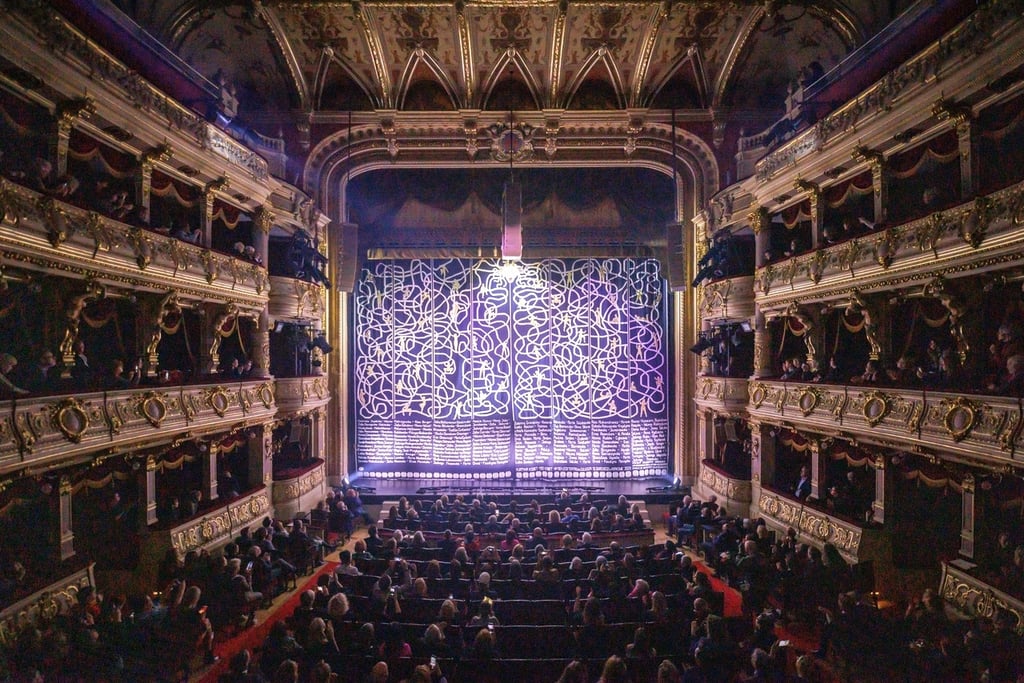
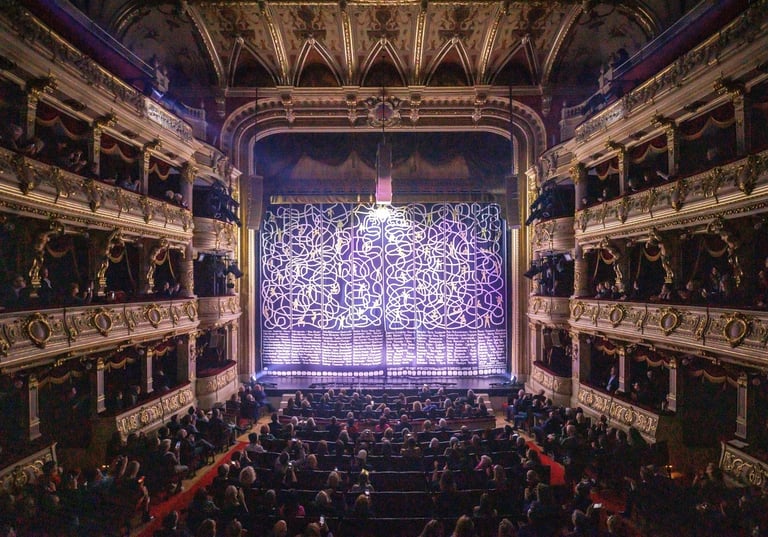
"The Women's Curtain", woven by Bernarda Rość and Lucyna Kędzierska to commemorate the 130th anniversary of the Juliusz Słowacki Theatre in Kraków (photo: Bartek Barczyk, link).
Sejpak
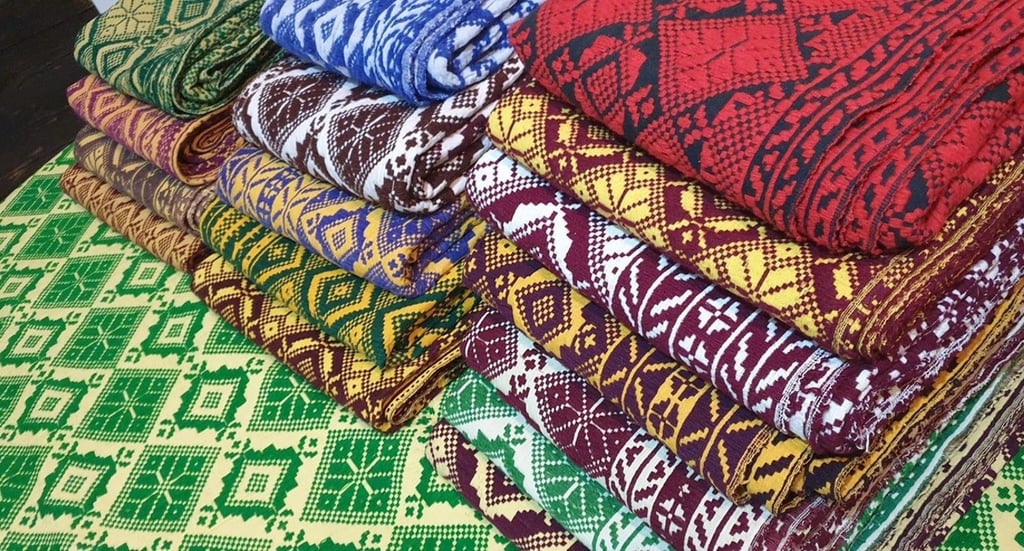
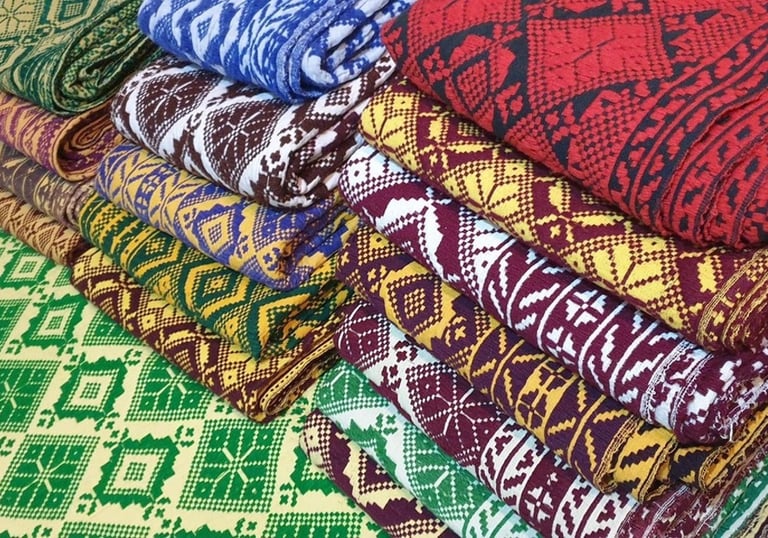
The sejpak is a traditional decorative folk textile originating from the Suwałki region and northeastern Poland. Its name comes from the regional dialect verb "sejpać", meaning "to tease," "to fray" or "to fluff." Traditionally, sejpaks were woven on narrow looms with a linen warp and a wool weft. Two narrow woven panels were then sewn together to create a wider textile.
The defining feature of a sejpak is its geometric design, composed of diamonds, diagonal lines, squares and zigzag borders. The pattern is created during weaving by manually selecting the pattern weft, producing a richly textured and highly decorative surface. Most sejpaks were woven in two contrasting colours, which further emphasized the rhythmic composition of the design.
Sejpaks served both decorative and practical purposes. They were used as bedspreads, bench covers, wall hangings, and horse blankets and they also formed an important part of a bride's dowry. A finely woven sejpak reflected both the skill of the weaver and the prosperity of the household.
After the Second World War, the tradition of weaving sejpaks gradually declined. Today, however, the technique is being revived thanks to the efforts of folk artists, cultural institutions and regional heritage organizations.
Perebory (prątki)
Brocaded textiles ("narzuty broszowane") represent a further development of the perebory technique. The ornament is created using an additional brocading weft, inserted only in selected areas of the fabric. As in perebory weaving, a "stębnówka" is used to secure the decorative weft in place. Unlike traditional perebory, these textiles are typically woven in multiple colours.
As part of a scholarship from the Polish Ministry of Culture and National Heritage, Magda, the founder of LoomRoom, visited selected ethnographic museums across Poland to study some of the finest traditional textiles preserved in their collections. The result of this research was the documentation and graphic reconstruction of 15 traditional pick-up weaving ("perebory") patterns, published in the pattern book "Woven Heritage – A Pattern Collection for Textile Makers".
The Woven Heritage pattern book is available in our online shop – link here.
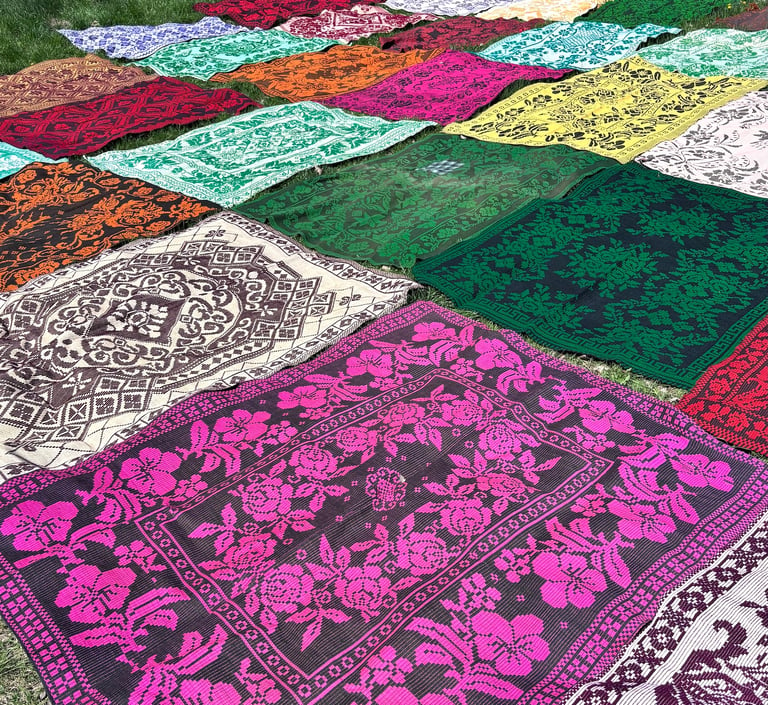
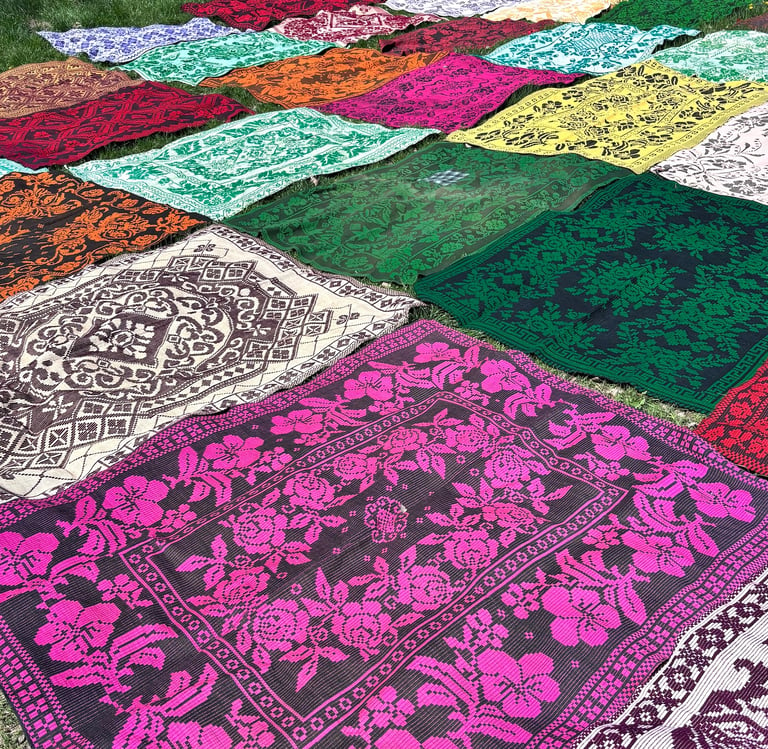
Perebory, also known locally as prątki, are a traditional weaving technique found in the Podlasie region. The pattern is created directly during weaving by manually selecting specific warp threads and inserting an additional decorative weft.
A distinctive feature of this technique is the use of a "stębnówka" — an extra binding thread that secures the decorative weft in place. This ensures that the pattern is firmly integrated into the fabric while creating a clearly defined, slightly raised design.
Perebory were most commonly used to weave bedspreads, ceremonial towels, tablecloths and table runners.
Originally, perebory featured simple striped compositions. Over time, the technique evolved, and weavers began producing bedspreads with a central composition, commonly known as "round" ("okrągłe") designs. These textiles were built around a prominent central motif surrounded by a decorative border running around the entire piece, marking a significant departure from the earlier striped layouts.
As the tradition developed, the decorative vocabulary became increasingly elaborate. Alongside the classic geometric motifs, weavers introduced floral designs featuring flowers and leaves, as well as animal motifs.
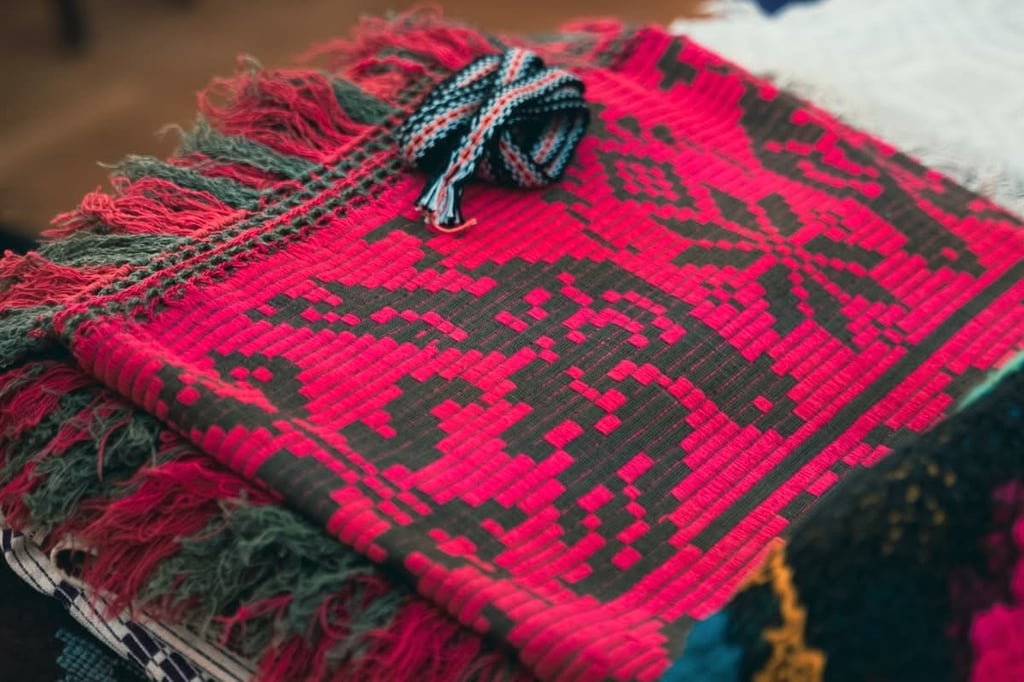
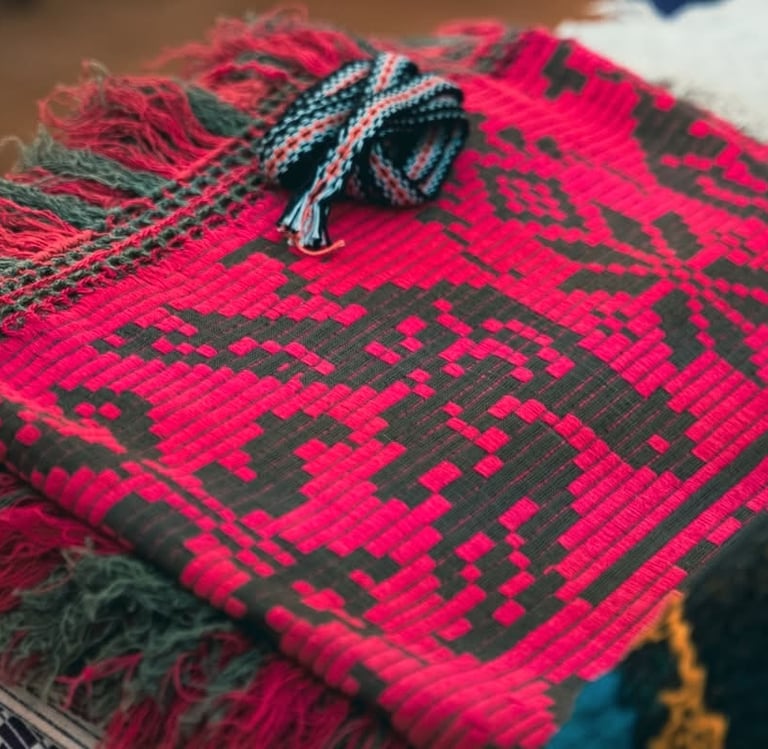
Example of a perebory textile featuring the characteristic dove motif (the rolled woven band visible on the textile is a "krajka")
Nadbuże Perebory
Nadbuże perebory are a traditional textile decoration technique characteristic of southern Podlasie and eastern Lubelskie, particularly the areas around Włodawa, Dołhobrody, and the Bug River Valley. The name perebor comes from the act of "selecting" or "picking" the warp threads during weaving. Rather than being embroidered after the fabric is finished, the pattern is created directly on the loom by manually selecting warp threads and inserting coloured weft yarn. This is a highly labour-intensive technique that requires considerable skill and experience.
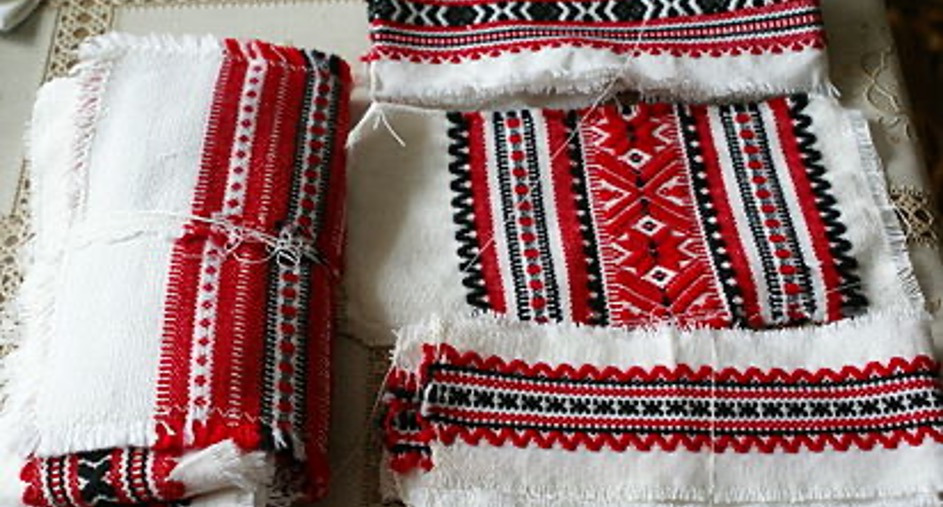
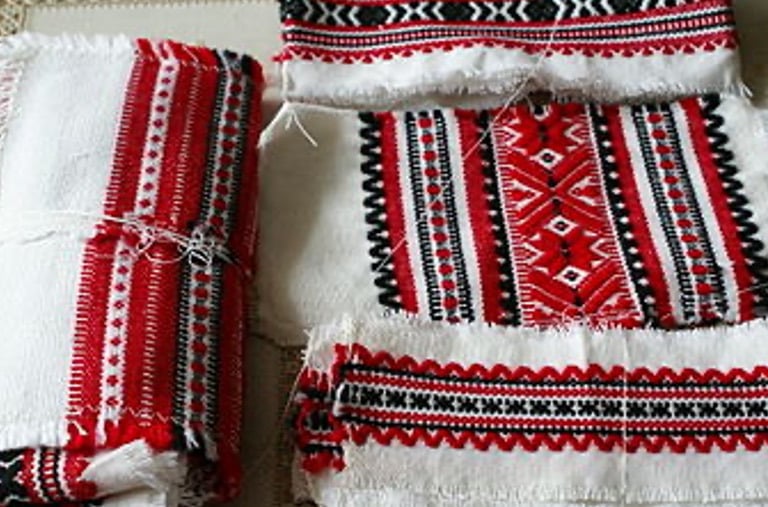
Nadbuże perebory were most commonly woven on linen cloth using linen or wool yarn. They are distinguished by symmetrical, striped ornaments composed of diamonds, crosses, stars, triangles and zigzags. The dominant colours were red, black, dark blue and burgundy, sometimes complemented with touches of yellow or orange. The motifs were woven onto a white background, enhancing their striking decorative appearance.
Perebory were used primarily to decorate shirts, aprons, skirts, ceremonial towels, tablecloths and napkins. They formed an important part of traditional folk costume and household furnishings, while also playing a role in family and religious ceremonies. The knowledge of weaving perebory was passed down from one generation to the next, most often from mother to daughter.
Although perebory often resemble embroidery, they are not embroidered. The ornament is created during the weaving process itself and becomes an integral part of the fabric. This distinctive characteristic makes perebory one of the most sophisticated techniques in traditional Polish folk weaving.
As part of the two-year project "Perebory. Interpretations – Promoting UNESCO Intangible Cultural Heritage", carried out by the Museum of Southern Podlasie in Biała Podlaska, Magda, founder of LoomRoom, digitized the traditional patterns published on the perebory.pl website.
LoomRoom.pl
Social media
CONTACT
© 2026 LoomRoom
Address
LoomRoom
Galeria Leśna (1st floor)
3 Maja 47
17-200 Hajnówka