
A Brief History of Cross-Stitch Embroidery
Cross-stitch is one of the counted-thread embroidery techniques, meaning that the stitches are worked by counting the threads of an evenly woven fabric. Its basic stitch is a simple geometric X-shaped cross.
Various forms of counted-thread embroidery were already known in ancient times, but cross-stitch in a form similar to that used today developed gradually across Europe, particularly from the Middle Ages onward. Even-weave linen fabrics played an important role, as they allowed embroiderers to count the threads accurately and create precise, regular patterns.
Between the sixteenth and eighteenth centuries, printed embroidery pattern books and samplers — pieces of fabric stitched with practice stitches and decorative motifs, usually for educational purposes — became increasingly popular throughout Europe. They served as a way to learn embroidery, develop precision and preserve traditional patterns.
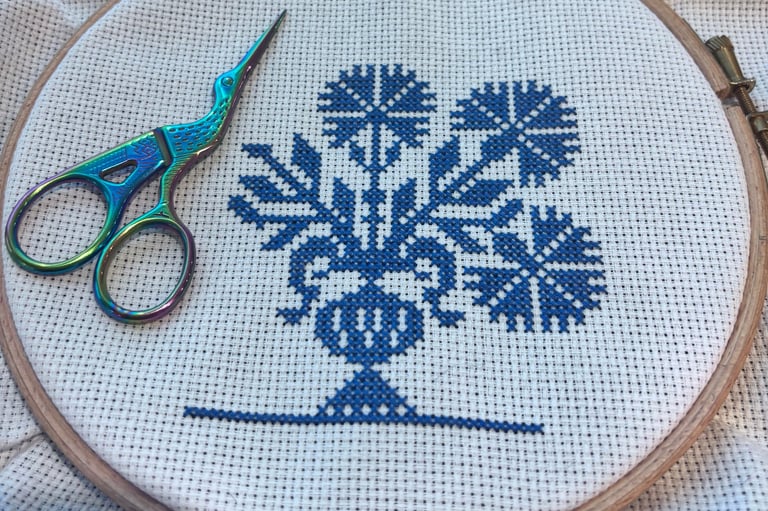
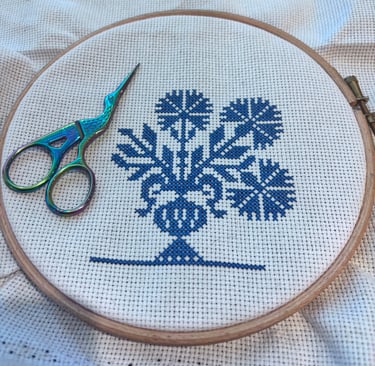
During the nineteenth century, cross-stitch became even more accessible thanks to advances in the textile industry, the production of ready-made embroidery canvas, the standardization of embroidery threads and the publication of patterns in books and magazines.
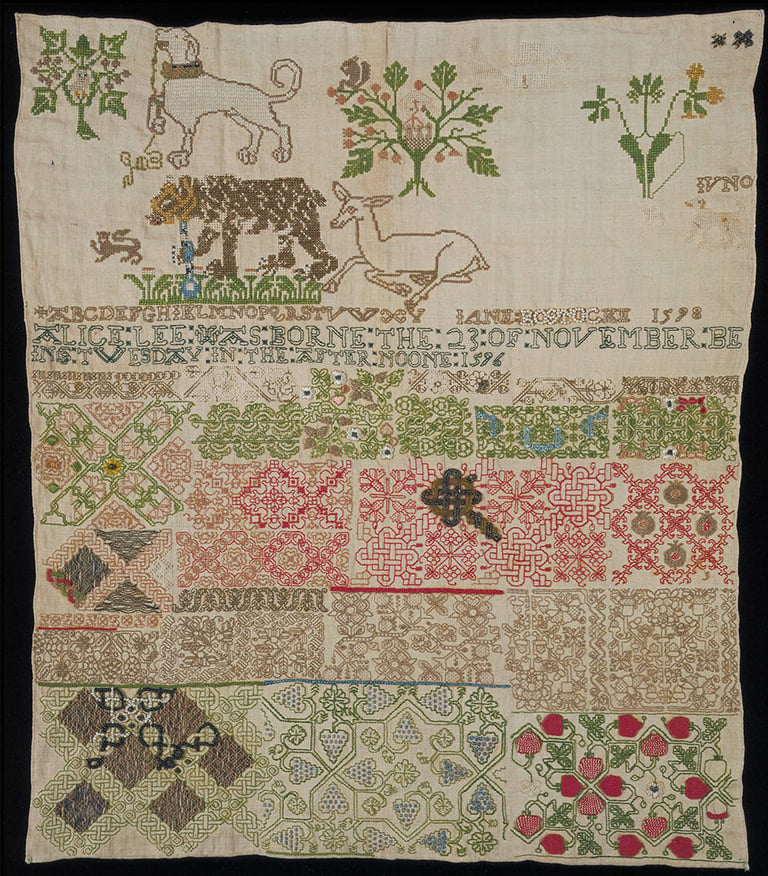
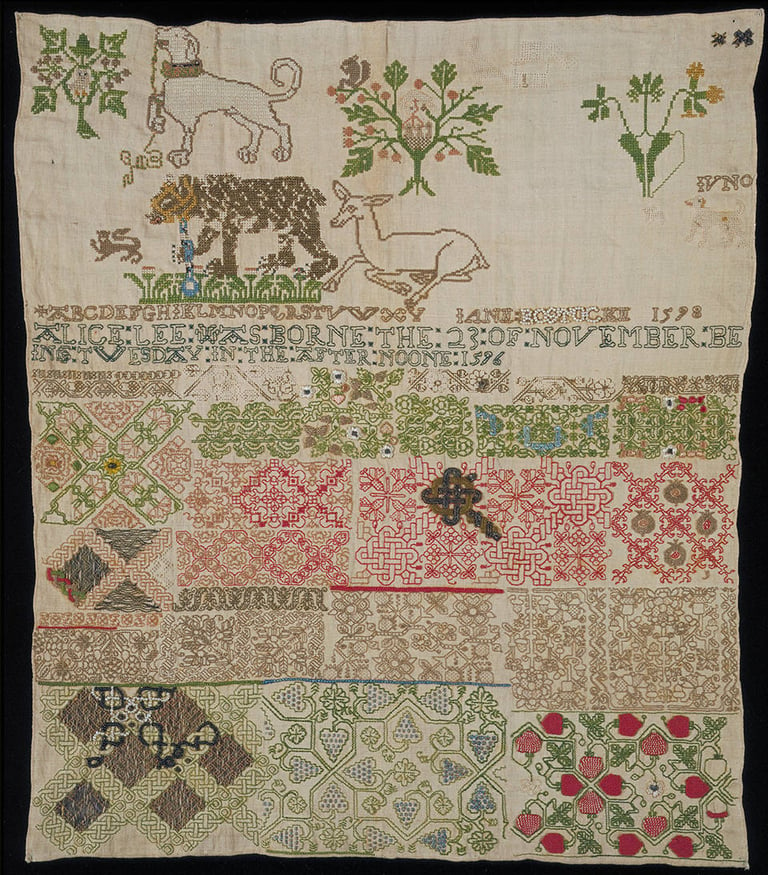
The oldest known British sampler, stitched by Jane Bostocke in 1598
(© Victoria and Albert Museum, London, Museum no. T.190-1960 - link)
In Polish folk tradition, cross-stitch embroidery was widely used to decorate clothing, ceremonial towels, tablecloths, wall hangings, and other household textiles. The patterns were often geometric, symmetrical, and rhythmic, making them a natural complement to the aesthetic of traditional woven fabrics.
Today, cross-stitch is valued both as a traditional craft and as a creative way of reinterpreting cultural heritage for contemporary makers.
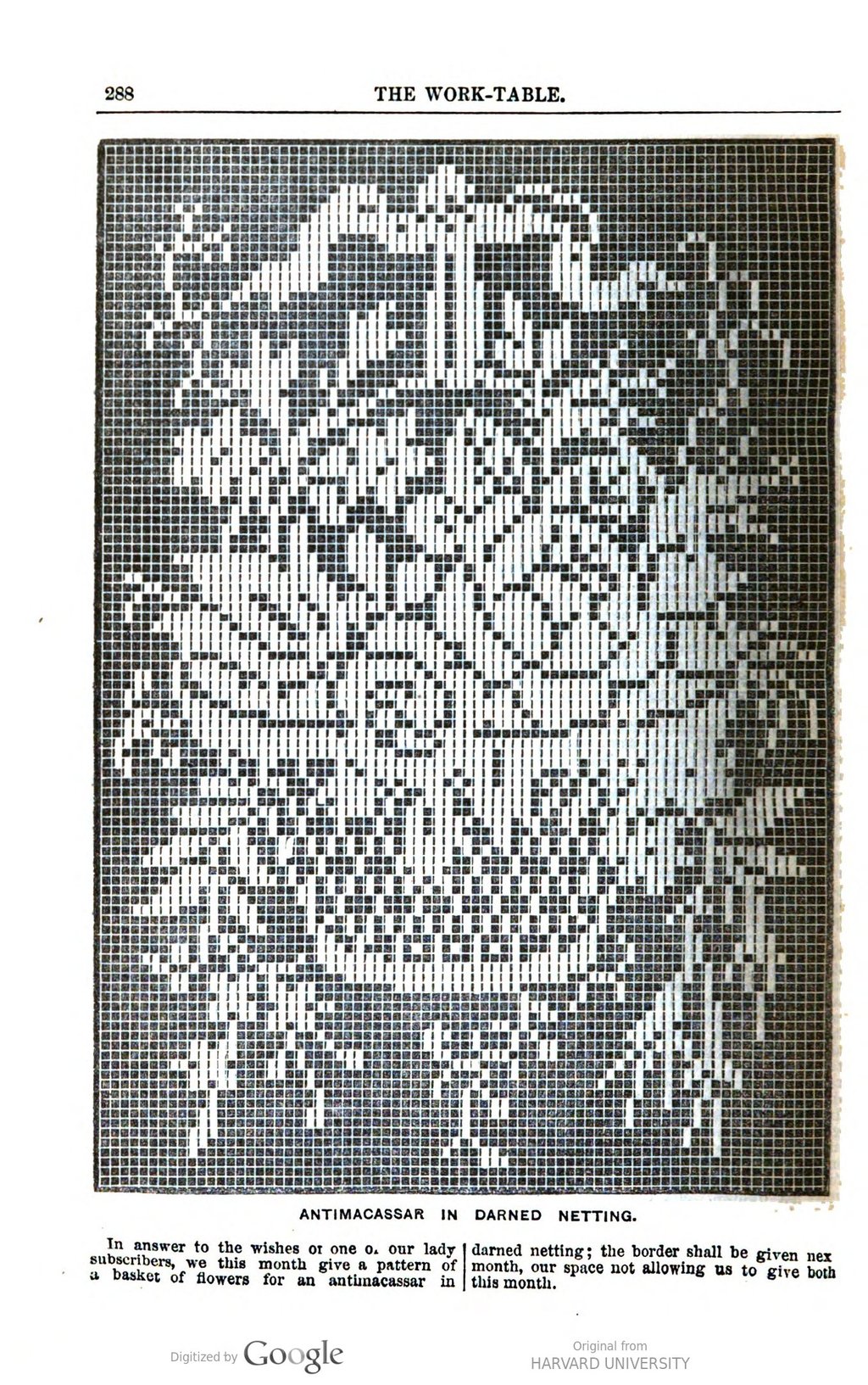
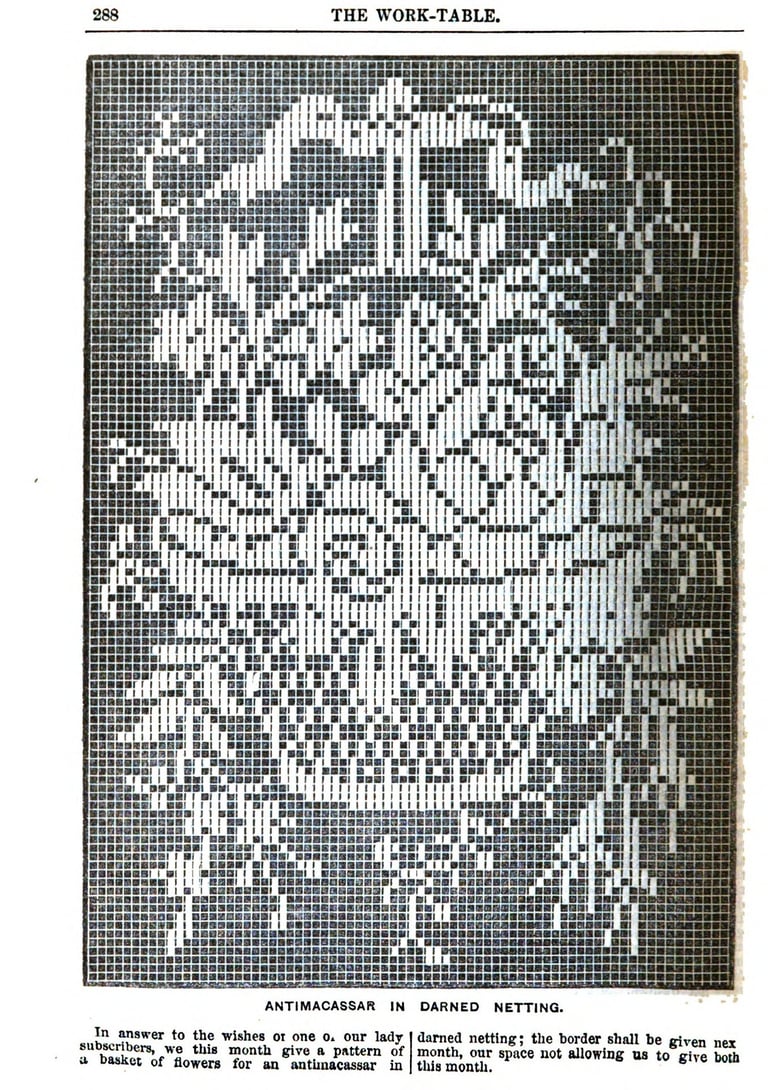
A pattern published in 1858 in the widely read European magazine The Englishwoman's Domestic Magazine (Vol. 6)
(Harvard University Library via HathiTrust Digital Library, public domain - link)
LoomRoom.pl
Social media
CONTACT
© 2026 LoomRoom
Address
LoomRoom
Galeria Leśna (1st floor)
3 Maja 47
17-200 Hajnówka