
A Brief History of Weaving
Weaving is one of the oldest crafts practiced by humankind. Its origins date back to prehistoric times. Long before the invention of writing, people learned to interlace plant fibres to create mats, baskets and simple woven fabrics.
The oldest known traces of textiles are more than 8,000–9,000 years old, and archaeological discoveries show that weaving developed independently in many parts of the world.
The earliest textiles were made from flax, hemp, nettle, and other plant fibres. In regions where sheep were kept, wool soon became an important material, while in Asia silk gained enormous significance and became one of the world's most prized fibres.
The first fabrics were woven on simple vertical looms, which were gradually replaced by more efficient horizontal looms. As weaving technology advanced, craftspeople were able to produce wider fabrics and increasingly intricate patterns.
For thousands of years, weaving was one of the most essential skills in every household. In many cultures, the entire process — from growing flax and spinning yarn to dyeing the threads and weaving the fabric — was carried out locally. Producing a single textile required weeks, and sometimes even months, of work. As a result, fabrics were highly valuable and treated with great care and respect.
By ancient times, weaving had reached a remarkable level of sophistication. The Egyptians were renowned for their exceptionally fine linen fabrics, the Greeks and Romans developed decorative weaving techniques, and in China the secrets of silk production were closely guarded for centuries. During the Middle Ages, weaving guilds emerged across Europe, maintaining high standards of craftsmanship and passing their knowledge on to future generations of weavers.
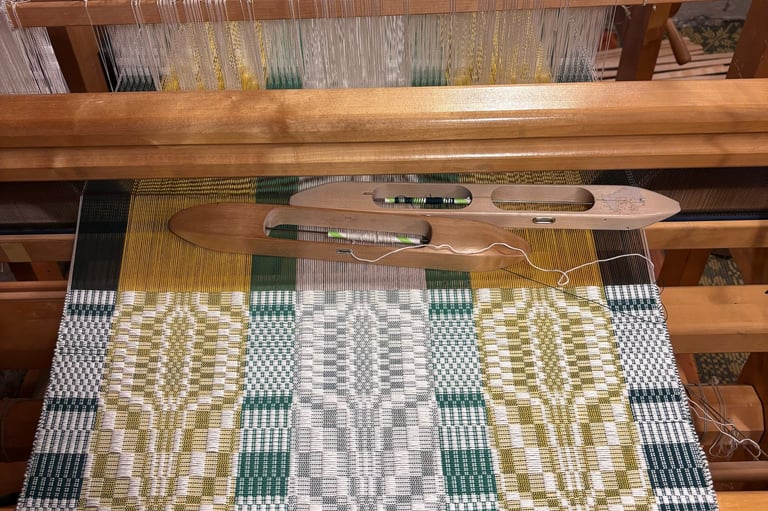
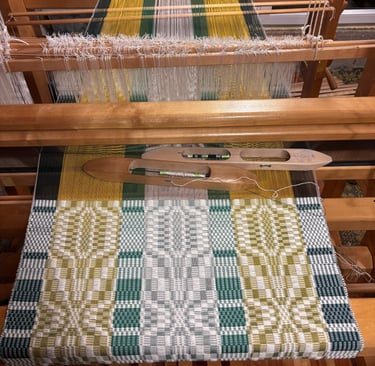
With the advent of the Industrial Revolution in the late eighteenth and early nineteenth centuries, mechanical looms — most notably the Jacquard loom — dramatically increased the efficiency of textile production, making fabrics more widely available. At the same time, traditional weaving carried out in homes and small workshops gradually declined. In many parts of Europe, including Poland, however, hand weaving remained an important part of rural culture throughout the nineteenth century and well into the first half of the twentieth century.
In Poland, weaving played a particularly significant role. As recently as a hundred years ago, almost every rural household had its own loom. Weavers produced linen cloth, sacks, towels, tablecloths, rag rugs, woven bands, and decorative textiles for the home. Over time, different regions developed their own distinctive techniques and patterns, making it possible to identify the origin of many historic textiles even today.
Today, hand weaving is experiencing a revival. More and more people are seeking objects made thoughtfully, from natural materials, and with respect for traditional craftsmanship. Contemporary weavers not only preserve historical techniques but also use them to create modern textiles, combining centuries-old knowledge with contemporary design.
Weaving is far more than a method of producing cloth. It is a story of human ingenuity, patience, and the passing of knowledge from one generation to the next. Every handwoven textile is the result of hundreds of individual actions and many hours of careful work, making each piece a unique expression of its maker's skill and craftsmanship.
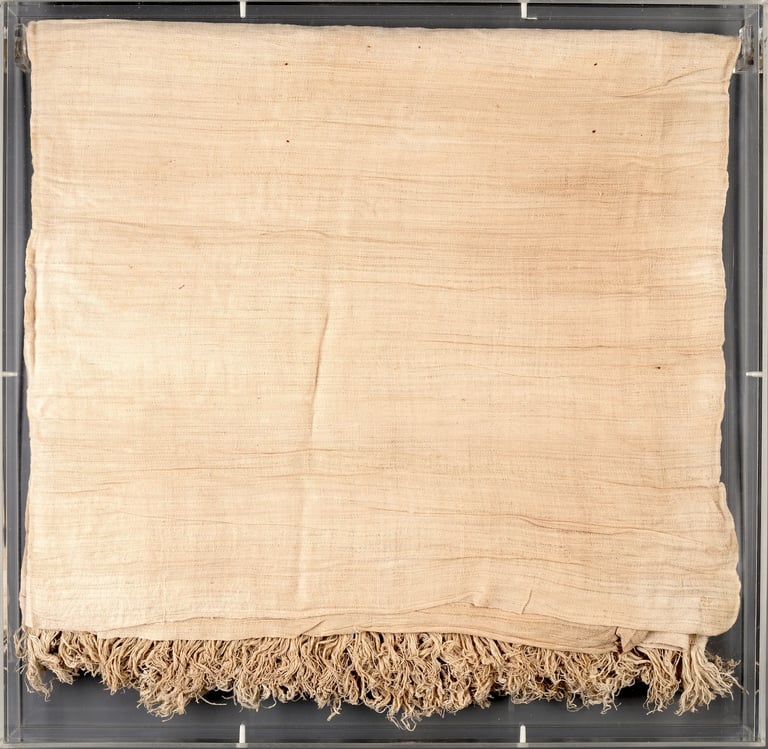
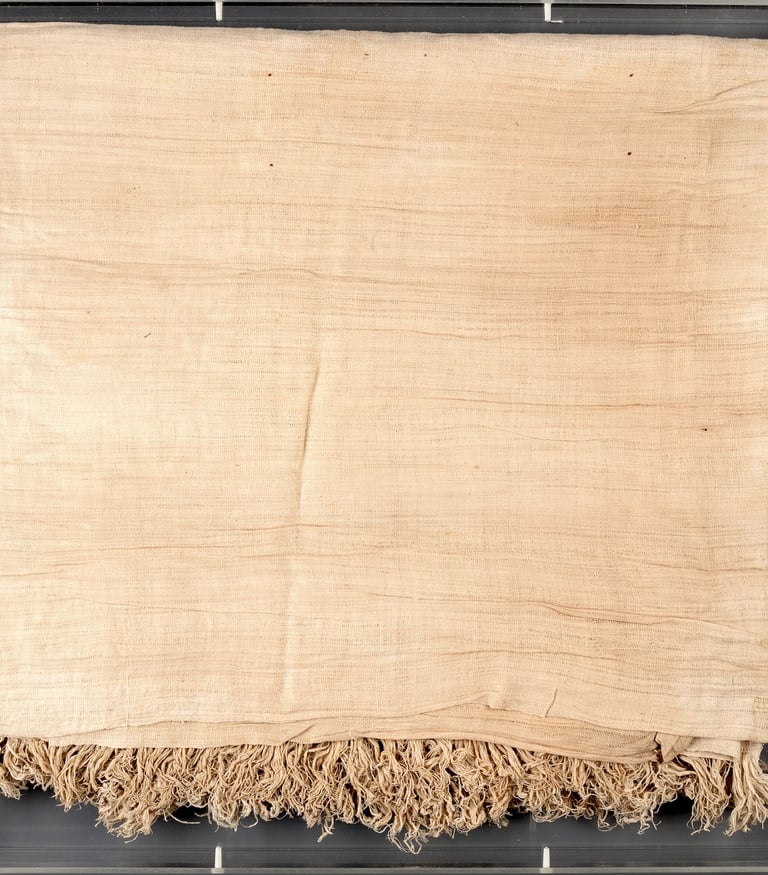
Linen textile from Ancient Egypt, dating to c. 2649–2465 BC.
(The Metropolitan Museum of Art, New York. Public domain – link)
LoomRoom.pl
Social media
CONTACT
© 2026 LoomRoom
Address
LoomRoom
Galeria Leśna (1st floor)
3 Maja 47
17-200 Hajnówka